

Welcome back to “One First,” a newsletter that aims to make the U.S. Supreme Court more accessible to lawyers and non-lawyers alike. I’m grateful to all of you for your continued support, and I hope that you’ll consider sharing some of what we’re doing with your networks.
Every Monday morning, I’ll be offering an update on goings-on at the Court (“On the Docket”); a longer introduction to some feature of the Court’s history, current issues, or key players (“The One First ‘Long Read’”); and some Court-related trivia. If you’re not already a subscriber, I hope you’ll consider becoming one—and upgrading to a paid subscription if your circumstances permit:
There’s quite obviously no bigger headline than the military strikes that the United States launched in Iran overnight Friday—strikes for which there is no remotely obvious statutory or constitutional authorization, and for which the Trump administration has yet to provide any. Unfortunately, there’s really not much new to say about the statutory and constitutional issues surroundiing these kinds of unilateral presidential uses of force beyond what I’ve already written, e.g., about the boat strikes or the Maduro arrest operation. Given that, it seemed hard to justify a standalone post on the subject—not because of a lack of gravity or seriousness, but because of a lack of novelty. (For more Iran-specific analysis, see this helpful backgrounder from Just Security.) As someone wrote on social media, “it’s a good thing Congress isn’t alive to see this.”
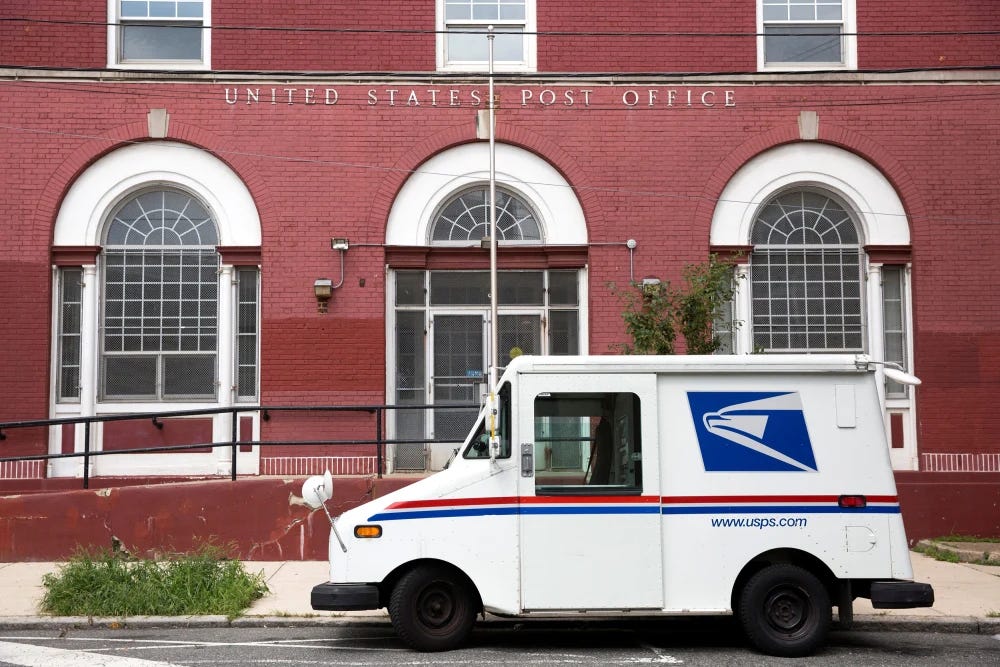
Instead, I thought I’d keep the focus on the Supreme Court this week, especially its ruling last Tuesday in U.S. Postal Service v. Konan. Writing for a 5-4 majority (with Justice Gorsuch joining the Democratic appointees in dissent), Justice Thomas held that the United States cannot be sued for damages under the Federal Tort Claims Act (FTCA) even when plaintiffs claim (and have pretty good evidence) that a postal worker intentionally refused to deliver their mail for racially discriminatory reasons. The ruling drew headlines (and apoplexy) from folks who worried that it immunized the government from any suit arising out of mail non-delivery—and what that might portend for mail-in ballots come this fall. Fortunately, it doesn’t do that; the ruling is limited to the specific context of suits seeking monetary relief under the FTCA for past misconduct. Suits for injunctive and declaratory relief against the Postal Service and its officers for ongoing illicit behavior remain available.
Still, it seemed prudent to provide a bit more background on how the FTCA works; its relationship to the federal government’s sovereign immunity; and how a statute that was designed and intended to make it easier to sue the federal government for damages has, thanks to subsequent Supreme Court decisions and statutory reforms, in fact made it harder. Against that backdrop, the significance of Tuesday’s ruling is less about the mischief it might incentivize come this fall, and more about the broader gaps in federal government accountability that it both highlights and exacerbates.
But first, the (other) news.
On the Docket
The Merits Docket
In addition to the ruling in Konan, about which more below, the Court handed down three other decisions in argued cases last week:
I’m going to put the holding of Justice Sotomayor’s unanimous opinion in Hain Celestial Group, Inc. v. Palmquist in a footnote, because it’s a case all-but designed for a Civil Procedure final exam—and almost nothing else.1
In Villareal v. Texas, Justice Jackson wrote for an effectively unanimous Court in upholding a state court ruling that had imposed certain limits on the subject-matter of what a criminal defendant and his lawyer could discuss during an overnight break in the defendant’s trial testimony. As Jackson explained for every justice except Thomas and Gorsuch (who concurred in the judgment), such a qualified trial court order appropriately struck the balance between the defendant’s Sixth Amendment right to counsel and the concern of a defendant altering his trial testimony after such a mid-testimony consultation. Just two quick notes: Although folks might be surprised to find Justice Jackson writing a majority opinion siding with a state in a criminal case, it strikes me that, as one of the two justices with trial-court experience, she may have had particular familiarity with this issue that would’ve made her the obvious choice for the assignment. And in any event, after the Court went the entire October 2024 Term without deciding a single direct appeal from a state criminal conviction, it’s nice to see it deciding one here (but more would be better).
GEO Group, Inc. v. Menocal involves a doctrine known as “Yearsley immunity,” which is when government contractors claim as a defense to a plaintiff’s claim that the government “authorized and directed” the conduct at issue. The question was whether Yearsley’s defense is formally an immunity from suit (in which case, a non-final district court ruling rejecting that defense—perhaps by denying a motion to dismiss—can be immediately appealed under what’s known as the “collateral order doctrine”), or merely a defense to liability (in which case, no interlocutory appeal is available, and an appeal can come only after an adverse final judgment). For an effectively unanimous Court, Justice Kagan held that it was the latter.
The Court also added one potentially significant case to its merits docket for next term—granting cert. last Monday in Suncor Energy Inc. v. Commissioners of Boulder County, Colorado, a dispute about whether federal law forecloses state-law claims seeking relief for injuries allegedly caused by the effects of interstate and international greenhouse-gas emissions on the global climate. In granting plenary review, the justices added a question about whether it has the power to even hear Suncor’s appeal, which might get in the way of reaching the big question the case presents.
And although I don’t usually flag the filing of briefs in upcoming merits cases, last week saw the filing of 43(!) amicus curiae (“friend of the Court”) briefs in support of the respondents (the plaintiffs) in Trump v. Barbara—the birthright citizenship case. There are a number of extraordinary submissions among those briefs, but I wanted to flag two, in particular: The first is on behalf of the U.S. Conference of Catholic Bishops and the Catholic Legal Immigration Network, and explains in detail how and why the Catholic Church’s committment to equal dignity “extend[s] to immigrants in the United States without legal status and their American children who were born in the United States.” And the second is on behalf of University of North Carolina law professor Eric Muller, and documents the (unquestioned) citizenship of children born to Japanese citizens while they were detained in U.S. internment camps during World War II. These two briefs are both focused on providing additional context to the underlying legal arguments, the context they provide is … revealing. As I’ve said before, I don’t think this is, or will be, a close case.
The Emergency Docket
After a surprisingly long pause, the Trump administration filed its latest (33rd, if you’re scoring at home) emergency application on Thursday. This one asks the justices to stay a district court ruling from November and allow Secretary Noem to revoke “temporary protected status” for Syrian nationals in the United States. What’s a bit unusual here is the timing: the district court ruled way back on November 19; the government appealed to the Second Circuit, but did not seek (and still has not sought) to expedite that appeal. And although the government asked for a stay of the district court’s ruling pending appeal, it did not ask for an administrative stay—even as the Second Circuit took a bit of time to sort out its jurisdiction over the appeal (and then denied the stay on February 17). So the government is now in the Supreme Court asking the justices to stay a ruling that the district court issued … 103 days ago. (That’s not what I would call an emergency.) In any event, Justice Sotomayor has called for a response from the plaintiffs by 4 p.m. (ET) this Thursday.
Otherwise, the only other news on the emergency docket is the absence of news. Specifically, we’re still waiting for rulings on the application from California parents seeking to put back on hold a state law barring public school teachers from outing transgender students to their parents (which was filed on January 8); and the applications seeking to restore Republican Congresswoman Nicole Malliotakis’s New York congressional district (in which Rep. Malliotakis had asked the Court to rule by February 23). It’s possible that both applications are being held for other events (perhaps further lower-court proceedings in the California case and perhaps the Louisiana redistricting ruling in the Malliotakis cases), but either way, they’ve been sitting for awhile.
The Week Ahead
We expect a full Order List from the Court at 9:30 ET, followed by the second week of arguments from the Court’s “February” session (I don’t make the rules) starting at 10:00 ET. We also expect one or more decisions in argued cases on Wednesday.
Miscellaneous
Finally, I wanted to flag the successful efforts of Fix the Court, especially FTC law clerk Emma Donohue, in getting the National Archives to publicly post the audio files from the Court’s opinion hand-down announcements during the October 2024 Term. I’ve written before about the Court’s (to me, difficult-to-justify) refusal to live-stream the audio of opinion announcements, and how the norm has been for that audio to be released to the public at the beginning of the next term (which should’ve been last October). That didn’t happen this fall—although, to all appearances, the non-posting was the result solely of bureaucratic snafus, not anything more deliberate and/or nefarious.
Beyond gratitude to Fix the Court for pressing the issue (and so much of its other important work to make the Supreme Court more transparent), it seems like yet another opportunity to reiterate that (and why) the Court should be live-streaming all of its public sessions, especially ones in which it hands down its rulings. And, at the very least, the Court should be releasing that audio, which is often plenty newsworthy in its own right, much faster.
The One First “Long Read”:
Sovereign Immunity and the FTCA
To understand the Federal Tort Claims Act, we have to start with two broader bits of background—one about federal sovereign immunity, and one about the backdoor around it provided by what’s known as the “officer fiction.” Back in March 2023, I covered both of those topics in an early edition of this newsletter, one that I’d encourage folks to check out in detail (among other things, the story of how Robert E. Lee’s home became our national military cemetery is … spicy).
But in a nutshell, the Constitution, for better or worse, has long been interpreted to confer “sovereign immunity” upon the federal government, which means it’s not possible to sue “the United States” at all without some kind of waiver of the federal government’s immunity. Every lawsuit against the federal government itself, or against a federal officer in their official capacity, must therefore identify a statute through which Congress has specifically authorized such a suit against the government.2
To be sure, Congress has passed statutes waiving much of the federal government’s sovereign immunity. The Tucker Act waives the government’s sovereign immunity for most non-tort monetary claims (e.g., takings claims or claims for breach of contract). And the Administrative Procedure Act, as amended in 1976, waives the government’s sovereign immunity for just about all non-monetary claims (which is why sovereign immunity almost never comes up when a litigant is seeking an injunction against a federal policy.)
The biggest hole that leaves is damages claims in tort cases—when the government injures its citizens in contexts in which it had no prior relationship with them, but the injury has ceased by the time of the litigation (so that backwards-looking relief is the only realistic possibility for redress). Historically, redress was provided in those cases not through litigation, but legislation. Congress would regularly enact “private bills” to compensate those who had been injured by the government in the course of its enforcement of the laws. But that process was cumbersome, inefficient, and, often, arbitrary—if not marred by political favoritism. By the early 1900s, Congress began waiving the government’s sovereign immunity in at least some general categories of tort cases—including a 1921 statute that authorized the Post Office to provide redress in cases in which “any damage is done to person or'property by or through the operation of the Post Office Department.”
But it was World War II—and the high incidence of torts, including car accidents, involving U.S. government personnel during the war—that impelled Congress to finally pass a broader waiver in 1946. Hence, the FTCA. The basic structure of the FTCA is to waive the government’s sovereign immunity in tort, but with a dozen (now 13) textual exceptions—cases in which Congress specifically preserved the government’s immunity.3 Otherwise, so long as the plaintiff was injured by a government officer or employee acting within the scope of their federal employment, and so long as the claim would give rise to liability against a private party under the law of the state in which the tort occurred, the FTCA provides a meaningful (if, sometimes, arduous) process for at least some redress (although no jury trial or punitive damages are allowed).
Most of the issues surrounding the FTCA involve, or at least derive from, its exceptions—i.e., the categories of cases in which the federal government’s sovereign immunity in tort has been preserved. One of the most important exceptions to the FTCA is the “intentional torts” exception—which preserves the federal government’s sovereign immunity for “[a]ny claim arising out of assault, battery, false imprisonment, false arrest, malicious prosecution, abuse of process, libel, slander, misrepresentation, deceit, or interference with contract rights.” In 1974, Congress narrowed that exception a bit by exempting claims arising out of “assault, battery, false imprisonment, false arrest, abuse of process, or malicious prosecution” by law enforcement officers. (Yes, it’s an exemption to the exception; again, I just work here.) But it’s still very difficult to obtain relief for most intentional torts by federal officers. Likewise, the FTCA exempts claims arising out of the government’s exercise of “discretionary functions,” which means recovery is foreclosed when an employee’s acts involve the exercise of judgment or choice.4 (These two exceptions together are why it is exceedingly difficult to use the FTCA in cases in which the government’s real sin was violating constitutional rights.)
And as especially relevant here, another one of those exceptions is the postal exception, which preserves the federal government’s immunity today over “[a]ny claim arising out of the loss, miscarriage, or negligent transmission of letters or postal matter.” The fight in Konan was over whether the statute’s reference to “loss” and “miscarriage” of mail included immunity for intentional misconduct, or whether it preserved the government’s sovereign immunity only for claims arising out of negligence. I’ll just say that I find Justice Sotomayor’s textual analysis far more thorough and persuasive than Justice Thomas’s here (Justice Gorsuch did, too, FWIW), but your mileage may vary.
Although Konan divided the Court 5-4, its consequences are fairly modest; there aren’t, fortunately, that many documented cases in which individual postal carriers deliberately refuse to deliver—or misdeliver—mail. (And if it happens at a higher level, it would be much easier to challenge in court.)
The bigger point is that Konan’s headlines exposed a lot of folks who weren’t previously aware to the swiss cheese-like regime the FTCA provides for redress. That regime was problematic enough when it was enacted; it got a lot worse in 1988—when Congress amended the FTCA ostensibly to streamline suits against the federal government. The “Westfall Act,” which was a response to the Supreme Court’s decision in Westfall v. Erwin, takes just about all state tort claims against federal officers and employees and converts them into FTCA claims—so long as the tort was committed within the scope of the officer or employee’s federal employment, i.e., while they were on the job and acting in some relation to their official duties. In other words, thanks to the Westfall Act, litigants can’t plead their way around the FTCA by alleging only state tort violations against federal officers, even though such suits were the dominant means by which federal officers were held accountable well into the twentieth century.
Critically, as the Supreme Court held in 1991, the Westfall Act demands that result even when the FTCA bars the suit—that is, even when the effect of converting a state-law tort suit against a federal officer into an FTCA claim against the United States is to extinguish the claim entirely in cases in which one of the FTCA’s exceptions applies. As Justice Stevens pointed out in his dissent, neither the text of the Westfall Act nor its legislative history revealed “any intent on the part of Congress to limit the scope of pre-existing remedies available to victims of torts committed by federal employees.” And yet, as interpreted by the Supreme Court in 1991, that’s the exact effect the Westfall Act had—and has had—in countless cases. For those seeking monetary relief against the federal government in tort cases, today it is almost always the FTCA or bust.
To be sure, the Westfall Act exempts one critical class of suits—those in which a claim “is brought for a violation of the Constitution of the United States.” But (1) the Supreme Court has narrowed the federal-law version of such suits (“Bivens” suits) to a fare-thee-well; and (2) courts have, to this point wrongly, assumed that the Westfall Act exception does not preserve state tort claims alleging constitutional violations. This is part of why, as I wrote back in October, the federal government and its officers today face almost no meaningful deterrent from the specter of damages; the only direct path is for cases magically avoiding all of the FTCA’s exceptions.
Given that the original purpose of the FTCA was to provide more redress, not less, that’s an ironic twist. It’s also an increasingly troubling one in countless contexts far removed from the specific (and disturbing) facts of Konan. And it’s something else for Congress to fix, at least when institutional accountability is a topic in which the legislature is once again invested.
SCOTUS Trivia: So Many Friends…
The 60+ amicus briefs in the birthright citizenship case (especially the 43 filed in support of the challengers) led a couple of folks to ask me online (and offline) about what “the record” is for the most amicus briefs in a single case.
I’m not sure there’s any official compendium to prove the answer, but the two widely accepted clubhouse leaders are Obergefell v. Hodges (the same-sex marriage cases from 2015) and Dobbs. In the latter, based on my very unscientific perusal of the docket, the Court appeared to receive approximately 135 amicus briefs (including 82 in support of Mississippi). In the former, the Court appeared to receive more than 140 amicus briefs (including 79 in support of the plaintiffs). Needless to say, it’s difficult to imagine that the justices read all of them (or, frankly, even that the clerks did).
I hope that you’ve enjoyed this installment of “One First.” If you have feedback about today’s issue, or thoughts about future topics, please feel free to e-mail me. And if you liked it, please help spread the word!
If you’re not already a paid subscriber and are interested in receiving regular bonus content (or, at the very least, in supporting the work that goes into this newsletter), please consider becoming one:
This week’s bonus issue for paid subscribers will drop on Thursday. And we’ll be back with our regular content for everyone no later than next Monday (but it’s 2026, so you never know). As ever, please stay safe out there.
In a nutshell, the plaintiff sued two defendants in state court. One defendant removed the case to federal court, only for the plaintiff to argue that removal was imporper because the federal court lacked jurisdiction—because the other defendant was from the same state as the plaintiff (in most state-law cases in federal court, the plaintiffs and defendants have to be from different states; this is known as “complete diversity”). The district court held that the non-diverse defendant had been improperly joined to the lawsuit and dismissed them on procedural, not jurisdictional, grounds—a flaw that “cured” the jurisdictional defect. It then went on adjudicate the case to a final judgment. On appeal after that final judgment, the Fifth Circuit held that the non-diverse defendant had not been improperly joined (that is, they were properly a party to the dispute)—and so the district court erred by dismissing them. The problem is that this holding necessarily resurrected the jurisdictional defect that the district court thought it had “cured,” the result of which was to force the final judgment to be vacated and the entire lawsuit returned to state court. The Supreme Court agreed with the Fifth Circuit. For however little it’s worth, I do too.
Suits against federal officers in their “personal” capacity don’t implicate the federal government’s sovereign immunity. But they run into other problems, including the fact that no federal statute specifically authorizes (in legal terms, “provides a cause of action for”) damages suits against federal officers for violating constitutional or statutory rights, and the fact that state-law claims get messed up by the Westfall Act, as discussed later in this post.
In Feres v. United States, the Supreme Court also recognized an atextual exception to the FTCA—to bar any tort suit by a servicemember “arising out of, or incident to” their military service. Justice Thomas has long criticized the “Feres doctrine” and called for it to be overruled. And I’ve long agreed with him.
An example of how this works can be found in the Fourth Circuit’s 2015 ruling in Rich v. United States. In that case, a federal prisoner stabbed by prison gang members sued the Bureau of Prisons alleging that it should have housed him separately from the gang members. Federal law permitted—but did not affirmatively require—BOP “to separate certain inmates from others based on their past behavior.” The Fourth Circuit held that, because the BOP was allowed to “consider several factors and exercise independent judgment in determining whether inmates may require separation,” its failure to separate Rich was a discretionary decision for which the federal government retained immunity.
I have to quibble with your assertion that there's nothing much to say about the constitutional issues implicit in Trump's war on Iran. What about presidential immunity from criminal liability? The holding in Trump v. US was that the president is entitled to absolute immunity from criminal prosecution for acts committed within his core constitutional authority, and to presumptive immunity for acts committed within the penumbral scope of his authority. But the president has no constitutional authority to initiate a war, and no authority whatever to do so unless congress first authorizes it. Thus, no aggressive war-making is within a president's core constitutional authority, and no war unauthorized by congress is within his penumbral sphere (except when defending against a foreign aggressor, which is not the case here). So Trump v. US does not extend immunity, either absolute or presumptive, to the current situation. Would it not follow that a president who unilaterally attacks another country with military force is criminally liable for all that follows within American jurisdiction, including, at the very least, deaths and injuries caused and suffered by American armed forces, and the misappropriation or theft of government funds and property? Now that American troops have been killed and injured, with more presumably to follow, this question acquires salience, if not urgency. And with the jurisdictional issue comes the thorny question of universal jurisdiction. I think there's a lot to say on these matters, and I'd love to see you say it.
Steve, wrt Iran, you wrote, "It seemed hard to justify a standalone post on the subject—not because of a lack of gravity or seriousness, but because of a lack of novelty."
Yes. Trump's incremental increase in the use of illegal force makes it hard to say anything new. But therein lies the problem. The horror becomes normalized. We have become accustomed to his behavior. Once again we are frogs in boiling water.
Still, thank you for all you do, even finding cause this week to agree, for once, with Justice Thomas. You never cease to amaze.