

Welcome back to “One First,” a newsletter that aims to make the U.S. Supreme Court more accessible to lawyers and non-lawyers alike. I’m grateful to all of you for your continued support, and I hope that you’ll consider sharing some of what we’re doing with your networks.
Every Monday morning, I’ll be offering an update on goings-on at the Court (“On the Docket”); a longer introduction to some feature of the Court’s history, current issues, or key players (“The One First ‘Long Read’”); and some Court-related trivia. If you’re not already a subscriber, please consider becoming one—and upgrading to a paid subscription, for which we just launched new bonus features, if your circumstances permit:
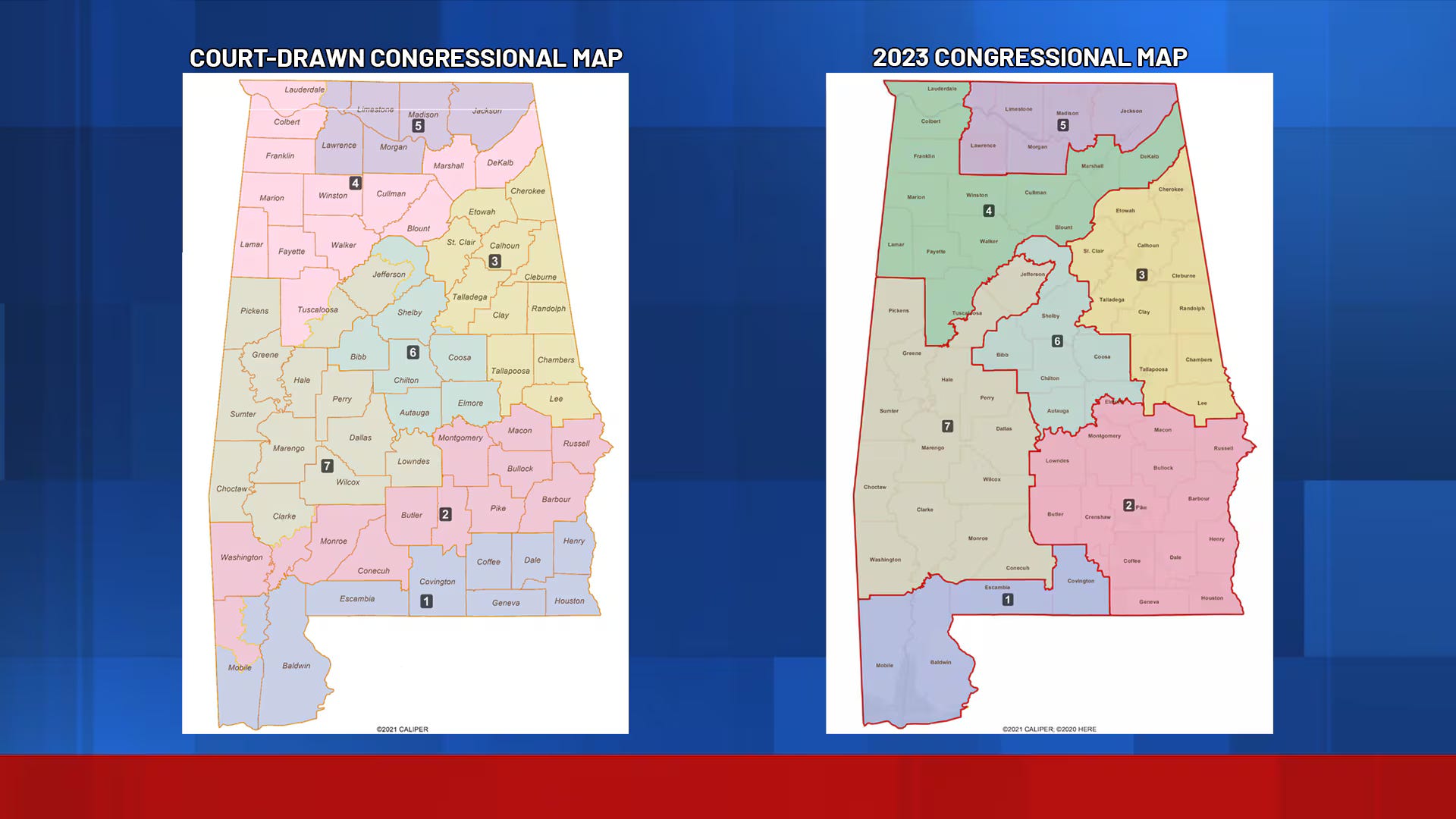
For the beginning of June, it was actually a relatively quiet week at the Supreme Court—including three decidedly modest rulings in argued cases on Thursday. Instead, the biggest headline came (yet again) on the emergency docket, where late Tuesday night, the Court granted a stay in the Alabama redistricting case that cleared the way for Alabama to use its 2023 congressional map. That decision has provoked quite a bit of commentary, almost all of it negative (Stanford professor Pam Karlan’s piece is especially worth reading—particularly with respect to how Tuesday’s ruling makes clear just how big a deal the April 29 decision in Louisiana v. Callais really is).
Rather than pile on, I thought I’d use today’s post to lay out, in detail, the evidence for the conclusion that the Court has abandoned any semblance of “principle” in its application of the “Purcell” doctrine. To cut to the punchline, the Court’s behavior in the Louisiana and Alabama cases over the past six weeks can’t be reconciled with or explained by any coherent understanding of what Purcell supposedly stands for. Perhaps one can single out individual decisions within this timeframe and defend them. But as is so often true with the Court’s work these days, it’s the overall pattern that reveals justices behaving in a way that has no obvious explanation other than politics.
More on all of that below. But first, the news.
On the Docket
The Merits Docket
The Supreme Court handed down three more rulings in argued cases on Thursday:
In Hikma Pharmaceuticals USA Inc. v. Amarin Pharma, Inc., a unanimous Court, in an opinion by Justice Jackson, reversed the Federal Circuit and held that, in a patent infringement case, a plaintiff must plausibly allege that the inducer “actively encouraged” infringing use of the patent—and that statements about how a generic pharmaceutical could be used did not suffice to establish such liability.
In SEC v. Sripetch, the Court, in a unanimous opinion by Justice Gorsuch, rejected a challenge to the Securities and Exchange Commission’s broad authority to recover illegal profits through the financial remedy known as disgorgement. Specifically, the Court held that a showing of pecuniary loss to investors is not required before the SEC may obtain a disgorgement award. Justice Thomas concurred, but wrote separately to suggest that, “[i]n a future case, we should recognize that disgorgement is now a legal remedy for which the Seventh Amendment requires a jury trial.” That would be a big deal if enough of his colleagues agree…
Finally, and speaking of the Seventh Amendment, an 8-1 majority held in FCC v. AT&T, Inc. that it does not offend the Seventh Amendment’s right to jury trial for the Federal Communications Commission to issue forfeiture orders without the involvement of a jury—even after the Court’s 2024 ruling reinvigorating the Seventh Amendment in SEC v. Jarkesy. Chief Justice Roberts wrote for the majority, holding that the reason FCC forfeiture orders don’t implicate the Seventh Amendment is because they’re not conclusive—and usually have to be enforced through separate proceedings. NYU law professor Noah Rosenblum has suggested that this is a quietly anti-administrative agency move, since it turns on the impotence of FCC forfeiture orders standing alone. It’s hard to disagree.
One note about FCC: The ruling was the sixth merits decision so far this term in a case from the Fifth Circuit, and the fifth time the Supreme Court reversed or vacated the New Orleans-based appeals court. No other lower court has been reversed more than twice. With five more Fifth Circuit cases still to come, it looks increasingly likely that this will be the third term in a row in which the Fifth Circuit is the most-reversed lower court in the country. Make of that what you will.
Monday’s Order List included one grant of certiorari for a case that will be argued next term—and a “summary reversal” in a post-conviction habeas case, from which Justices Thomas and Alito dissented. I’ve written before about the rather remarkable uptick in these kinds of rulings (“per curiam” opinions resolving the appeal at the certiorari stage) this term. Last Monday’s ruling in Whitton v. Dixon is the eighth of the term—not all of which, as Whitton underscores, have come from the Court’s “right.” As recently as OT2023 (so, two terms ago), there were no such rulings. Of course, the Court hasn’t provided any insight into why we’re seeing so many more of these. But, by this point, it is clearly a trend.
The Emergency Docket
Obviously, Tuesday night’s grant of a stay in the Alabama redistricting case (Allen v. Milligan) was the biggest news on the emergency docket—if not in general—last week. The only other full Court ruling on an emergency application came Monday, when the justices denied an application from Florida death-row inmate Andrew Lukehart to stay his impending execution. There were no public dissents.
The Week Ahead
We expect a regular Order List at 9:30 this morning, and the Court is scheduled to take the bench again (and hand down more rulings in argued cases) this Thursday at 10:00 ET. Other than that, there’s nothing currently expected out of the Court this week.
Miscellaneous
Finally, I thought I’d flag the official publication, in the Supreme Court Review (the peer-reviewed journal run out of the University of Chicago Law School), of my article on the Court’s handling of Trump-related emergency applications during the October 2024 Term—titled “The Supreme Court’s (Self-Defeating) Supremacy.” The article argues that the unifying theme of the Court’s behavior in those cases was not that “this Administration always wins” (as Justice Jackson argued); rather, it was the justices’ effort to preserve their own supremacy, displaying sustained disrespect for both lower courts and Congress while repeatedly (if not homogeneously) empowering the executive branch to defy statutes, the separation of powers, and the lower courts. The article closes by suggesting that such an approach will necessarily be self-defeating in both the medium and long term.
The published version of the piece is available via this website, but only if you have some kind of electronic access (e.g., through an educational institution), and my author agreement doesn’t allow me to post it here. Otherwise, the (free) draft that I posted to SSRN last October is really not that different from the final product, so you can simply download that one to get the gist. I’d also be happy to send the final version by e-mail to folks who don’t otherwise have access to it.
The One First “Long Read”: Purcell’s “Principle”?
Regular readers of this newsletter know that I tend to come back, again and again, to the same theme: the more that the Supreme Court decides through unsigned and largely unexplained orders on its emergency docket, the harder it becomes to take its stated principles at face value. There may be no better illustration of that problem than the so-called “Purcell principle.” Over the past six weeks, in a series of late-breaking orders directly touching Louisiana and Alabama, the justices have made it remarkably difficult to believe that Purcell is doing any real work as a neutral rule of judicial restraint—as opposed to functioning, in practice, as a one-way ratchet. What I want to do in the following paragraphs is to walk through the recent orders, lay out as precisely as I can the inconsistencies they expose, and then close with the uncomfortable question those inconsistencies raise: whether a principle that bends this reliably in one direction can still meaningfully be called a “principle” at all.
What Purcell Is Supposed to Stand For
The doctrine takes its name from Purcell v. Gonzalez, a 2006 per curiam decision (itself handed down on the emergency docket) in which the Court stayed a lower-court order that had blocked Arizona’s voter-identification requirement less than two weeks before a midterm election. The Court’s stated rationale was administrative and prophylactic: “Court orders affecting elections, especially conflicting orders, can themselves result in voter confusion and consequent incentive to remain away from the polls,” and “[a]s an election draws closer, that risk will increase.” From that unsigned opinion, UCLA law professor Richard Hasen later coined the label “the Purcell principle”—the general rule that federal courts should refrain from altering election rules on the eve of an election to avoid confusing voters and burdening administrators.
Two features of the doctrine are worth pausing on, because they do most of the work in what follows. First, the Purcell Court never defined how close is “too close” to an election, leaving lower courts to guess at the boundary and the justices free to invoke it case by case. Second, as Justice Kavanaugh framed it in the 2020 Wisconsin litigation, Purcell is asymmetric: “It is one thing for state legislatures to alter their own election rules in the late innings and to bear the responsibility for any unintended consequences,” but “quite another thing for a federal district court to swoop in and alter carefully considered and democratically enacted state election rules when an election is imminent.” Purcell, on this account, is a constraint on (federal) judges, not on legislatures. We’ll come back to both parts of this distinction in a moment.
The 2026 Sequence
The recent chapter begins on April 29, 2026, with the Court’s merits ruling in Louisiana v. Callais. By a 6–3 vote, the Court narrowed section 2 of the Voting Rights Act, holding that Louisiana was not required to draw a second majority-Black district and treating its effort to do so as an unconstitutional racial gerrymander. The timing was conspicuous: the decision landed less than three weeks before Louisiana’s congressional primary—three days before early voting was scheduled to begin—after the Court had sat on the case for quite a while (including hearing argument last term and then ordering reargument last June).1
Had things ended there, the Court might have avoided at least some of the controversy it has created for itself over the past six weeks. But on May 4, the Court granted Louisiana’s (unusual) request to issue the judgment in Callais immediately—a move that made sense only in a world in which the Court wanted to make it easier for Louisiana to re-draw its maps for the ongoing election cycle, versus worrying only about the law in future elections. Indeed, the justices could just as easily have waited the normal 32-day period—or, as those challenging Louisiana’s original map argued, stayed their ruling for the duration of the 2026 cycle. Dissenting from that order, Justice Jackson pointedly invoked “the so-called Purcell principle” as a reason the majority should have stayed its hand. Louisiana then suspended its primary and redrew its map to dismantle the majority-Black district, even though absentee ballots had already been cast—the very last-minute disruption and confusion that Purcell purportedly exists to prevent.
Alabama followed an even more tortured path. Recall that the Court had already held (in June 2023) that Alabama’s first attempt to redraw its maps after the 2020 Census violated section 2 of the VRA. Alabama responded with a new map (the “2023 map”) that a three-judge district court, in an exhaustive, 500+-page opinion handed down in May 2025, unanimously held to violate both section 2 of the VRA and the Equal Protection Clause of the Fourteenth Amendment, because it intentionally diluted the votes of Black Alabamians. (Not that it should matter, but the three-judge court included two Trump appointees and a Clinton appointee.) In other words, the three-judge district court’s May 2025 injunction, entered well before the 2026 election cycle, did not rest solely on the grounds the Supreme Court revisited in Callais (in which, in any event, the majority distinguished its 2023 ruling blocking Alabama’s map); it rested independently on a constitutional claim that was not before the justices in the Louisiana case or in the 2023 Alabama case.
Undeterred, Alabama asked the Court to do two things after Callais—and to do them quickly. First, it asked for expedited merits review of its appeal challenging that district court ruling (or for a “GVR” that would have vacated that ruling and sent it back to the district court for reconsideration). Second, and in the alternative, it asked for a “stay” of that injunction while its appeal remained pending. Either way, the goal was expediency—to get out from under the district court’s injunction of the 2023 map in time to use that map (or a new one) this cycle.
On May 11, in a one-paragraph order, the Court took the former of these steps—GVRing the lower-court orders that had blocked Alabama’s 2023 map and remanding for reconsideration in light of Callais—again less than a week before primary voting was set to begin. There was, it should be stressed, no need for the Court to move so quickly. It chose to do so—never mind its prior insistence that federal courts (including the Supreme Court) should stay their hand in exactly such contexts.
Justice Sotomayor, joined by Justices Kagan and Jackson, dissented, warning the order “will cause only confusion as Alabamians begin to vote in the elections scheduled for next week.” After explaining why Callais shouldn’t have undermined the Alabama district court’s conclusions, she also explained why Purcell should in any event have cut against intervention:
Even if Callais had something to say about the evidence necessary to establish discriminatory intent, it still would not be appropriate to vacate the decision below at this time. That is because Alabama’s congressional primary election is next week, and vacating the District Court’s injunction will immediately replace the current map with Alabama’s 2023 Redistricting Plan until the District Court acts, even though voting has already begun. Vacatur is an equitable remedy, and the Court should not lightly wield it to unleash chaos and to confuse voters.
Nevertheless, as Sotomayor pointed out, the Court’s GVR didn’t stop the district court from moving quickly to once again enjoin Alabama’s 2023 map. And that’s exactly what happened. On May 26, the three-judge panel (in a 102-page opinion) unanimously reaffirmed that the 2023 map was “tainted by intentional race-based discrimination,” and barred its use. The district court also specifically addressed the Purcell elephant in the room—pointing to the Supreme Court’s own intervention on May 11 as proof that it wasn’t “too close” to the election for federal courts to get the law right.
Alabama returned to the Court the next day, accusing the panel of a decision that “defies Callais, manipulates the Purcell principle, and offends the Constitution’s promise of equal protection.” And a little after 9 p.m. last Tuesday, the Court granted its applications. In an unsigned, four-page “per curiam” opinion (more on that in the trivia, below), the majority held that Alabama was likely to succeed on the merits, faulted the district court for failing to presume legislative good faith, and concluded that the district court—not the State—had acted too late. “We have repeatedly cautioned that lower federal courts should not ‘alter the election rules on the eve of an election,’” the majority wrote. Note the word that is doing a lot of work in that sentence—“lower.” Purcell has never been viewed as a principle that applies only to the lower federal courts, nor would it make any sense as such. At its most defensible, it is a judge-made limit on the equitable powers of federal courts in general. That necessarily includes the Supreme Court.
Justice Sotomayor, once again joined by Justices Kagan and Jackson, dissented. Specifically, she accused the majority of the “weaponization” of Purcell—of allowing a state to make late, legally dubious changes, use those changes as the basis for getting out from under an earlier injunction (that was not “too late” under Purcell), and then escape subsequent judicial scrutiny. The order, she wrote, “disregards both democratic values and the rule of law,” and would force officials to reassign hundreds of thousands of voters “in just days at best, a task that Alabama previously represented would take months.”
The Case for Inconsistency
Here is where I want to be careful, because the charge of “inconsistency” sometimes gets thrown around loosely, and the Court is entitled to draw real distinctions. But the inconsistency here is not a matter of impression or mood; it is visible in the orders themselves. Start with the asymmetry between 2022 and 2026. In Merrill v. Milligan, the Court in February 2022 stayed a unanimous lower-court ruling that Alabama’s congressional map likely violated section 2, with Justice Kavanaugh’s concurrence (joined by Justice Alito) invoking Purcell to keep an arguably unlawful map in place roughly nine months before the election. The Court did the same for Louisiana that cycle. At that time, Purcell counseled against judicial disruption of a state map, even one that lower courts had found unlawful (including in a holding the Supreme Court would later affirm).
In 2026, by contrast, Purcell was deployed to permit a state’s eleventh-hour switch to a map a court had found intentionally discriminatory—requiring exactly the kind of large-scale administrative scramble the doctrine was meant to prevent. In the meantime, when Purcell should have counseled against Supreme Court interventions in Louisiana (when it was asked to issue the judgment immediately) and Alabama (when it was asked for a stay or GVR of the May 2025 district court ruling), the “principle” was nowhere to be found. Note what that means: in both directions, and on opposite facts, the (Republican-controlled) state won—with Purcell applied in some contexts, but not others.
The Supreme Court’s December 2025 intervention in the Texas redistricting case only sharpens the point. In Abbott v. League of United Latin American Citizens, the Court stayed a three-judge district court’s injunction against a map found to be an illegal racial gerrymander—even though the injunction issued almost a year before the general election. Justice Alito’s concurrence invoked Purcell’s vocabulary of confusion and an “active primary campaign.” If a year out is “too close” for a federal court to act in Texas, what’s the argument for the Supreme Court’s May 4 ruling issuing the judgment immediately in Callais, or its May 11 ruling issuing a GVR in the Alabama cases? In other words, the real sin here isn’t what the Court did on Tuesday night; it was what it did beforehand to help precipitate Tuesday’s ruling. There’s no universe in which the Alabama three-judge district court’s May 2025 ruling was “too close” to the election; only the Supreme Court’s own GVR (which certainly was itself too close) opened the door to Purcell, because it necessitated a new injunction from the same judges on the same questions.
The point is not that any one of these orders is indefensible in isolation. It is that, taken together, they cannot be reconciled by reference to a neutral, administrable rule. The Court has extended “the eve of an election” to nearly a year when staying relief sought by minority plaintiffs, yet found no Purcell obstacle to its own rulings wiping away lower-court decisions and clearing the way for last-minute changes to congressional districts in Louisiana and Alabama. As Loyola’s Justin Levitt put it in a studied understatement, the doctrine increasingly “seems like it’s really not a principle at all.”
The Appearance of Politics
That’s the part of the story that should worry even those who are otherwise comfortable with where the Court has landed on the merits. A doctrine this malleable invites precisely the inference the Court can least afford to have drawn about it. Professor Wilfred Codrington’s study of pandemic-era applications found that in nearly every instance Purcell operated to benefit one party and to depress turnout—producing the very confusion it purports to avoid. The current sequence reinforces that perception, because each ruling has cleared the way for Republican-favored maps that eliminate majority-Black (and likely Democratic) districts across the South. The appearance problem is not cured by the orders’ silence; in both Callais and the May Alabama order, the majority did not even mention Purcell, leaving the reasoning to be supplied by dissenters and commentators. Even last Tuesday’s per curiam opinion cites Purcell only elliptically—pointing to a 2020 ruling that … cited Purcell. When the Chief Justice publicly laments that the public wrongly views the justices as “political actors,” orders that consistently favor one party in racially charged redistricting fights and don’t do anything to explain away the justices’ substantively and procedurally inconsistent behavior make that lament harder to credit.
I want to take the strongest version of the other side seriously, because there is a principled defense, and it deserves a fair hearing. Purcell, on its own terms, restrains federal courts, not states; a state’s decision to change its own rules “in the late innings” is a different matter for which the state bears political responsibility. On that view, last Tuesday’s Alabama ruling is not Purcell abandonment but Purcell fidelity: the district court was the late-acting federal actor, and lifting its injunction simply restored the state’s prerogative. Notre Dame’s Derek Muller has also suggested that Purcell is generally understood not to bar a court from lifting an injunction, as opposed to imposing one, although it seems to me—and the equity guru, Professor Sam Bray at Chicago—that equity is and ought to be reciprocal. That leaves us with Alabama’s own framing—that no court should force a state to conduct elections under a map the Supreme Court’s new precedent suggests is unlawful. That argument has at least some force in the abstract.
The trouble is that the defense runs aground on the Court’s own 2022 conduct. The premise that a state should never be made to run an election under a legally suspect map is precisely what the Court rejected in 2022—when Justices Kavanaugh and Alito specifically invoked Purcell to require Alabama and Louisiana to use maps in the 2022 election cycle that lower courts had found unlawful. Indeed, the Court’s 2022 interventions led directly to at least three other states using maps lower courts concluded were unlawful—netting Republicans as many as five seats in the 118th Congress (the exact margin of the Republican majority in the House).
The Court cannot coherently hold both that Purcell compels using unlawful maps in Alabama and Louisiana (2022) and that Purcell isn’t violated by intervening in the middle of primary voting to allow Alabama and Louisiana to get out from under unlawful maps (2026). One of those sets of results can be defended; they can’t both be. And that, to me, is the bottom line. A rule that can license a result and its precise opposite, depending on which way the partisan valence runs, is not a principle of restraint at all. It is unstructured discretion wearing the costume of restraint—and the longer the Court declines to explain itself, the more threadbare that costume becomes, and the more the Chief Justice’s complaints about the Court being perceived as political may be protesting just a wee bit too much.
SCOTUS Trivia: Where Rulings Appear on the Website
Tuesday’s ruling in the Alabama case came down as a formal “opinion of the Court,” which confused a fair number of observers. Indeed, as I’ve noted before, there’s no obvious rhyme or reason to which rulings on emergency applications come down like the Alabama case (with a “per curiam” opinion of the Court), which come down as orders with (sometimes lengthy) explanations like the Texas redistricting case, and which come down with no explanation whatsoever.
The one thing we know is that the distinction isn’t the word count; there are “orders” with longer explanations than some of the Court’s recent “per curiam” opinions. Nor is it subject-matter, as the difference between the (substantively similar) Texas and Alabama rulings makes clear. Indeed, there is no explanation anywhere for when (or why) an unsigned explanation graduates from an “order” to a “per curiam” opinion; the choice seems to live entirely in internal custom to which no one outside the Court is privy (some might even say it’s “shadowy”—but apparently that’s pejorative).
My working hypothesis, offered with a mix of skepticism and uncertainty, is that this is less a rule than a habit, and that the “per curiam” label gets affixed when enough justices feel they’re issuing something opinion-shaped rather than order-shaped—a distinction that may be real to the people inside the building but is essentially invisible to the rest of us. Indeed, it would be one thing if the Court treated per curiam opinions as “more” precedential than orders, but that’s no longer true, either.
Instead, all I can do is tell you how this distinction manifests. When a ruling comes down as a per curiam opinion of the Court, it goes on the “Opinions of the Court” page, regardless of how it got there. When it comes down as an “order,” it shows up either on the “Orders of the Court” page or, if anyone writes a separate opinion respecting the order, on the “Opinions Relating to Orders” page. And you’ll never know in advance where to look.
Don’t blame me; I just work here.
I hope that you’ve enjoyed this installment of “One First.” If you have feedback about today’s issue, or thoughts about future topics, please feel free to email me. And if you liked it, please help spread the word!
If you’re not already a paid subscriber and are interested in receiving regular bonus content (or, at the very least, in supporting the work that goes into this newsletter), please consider becoming one:
This week’s bonus issue will drop on Thursday. And we’ll be back with our regular content for everyone (no later than) next Monday. As ever, please stay safe out there.
Nor is there anything to criticisms from the right (and from Justice Alito!) that the Court took unusually long to decide Callais. Consider the two compassionate release cases the Court decided on May 28—Fernandez v. United States and Rutherford v. United States. Those (somewhat-less-significant) rulings each came down 197 days after oral argument. Callais came down 196 days after being argued. That’s just how long the Court can take, especially with cases argued in October or November on which the justices are sharply divided.
It is the "whatever seems expedient to keep the Republicans in power" principle, given that this political party is behind the furthering of the far rights counterrevolutionary goals. This Court has bent over backwards to facilitate their consolidation of power. If they have any other principles. I can't find them.
Thoughtful analysis like this is exactly why independent research matters. Understanding the reasoning behind legal and institutional changes is often more important than the headlines.