

Welcome back to “One First,” a newsletter that aims to make the U.S. Supreme Court more accessible to lawyers and non-lawyers alike. I’m grateful to all of you for your continued support, and I hope that you’ll consider sharing some of what we’re doing with your networks.
Every Monday morning, I’ll be offering an update on goings-on at the Court (“On the Docket”); a longer introduction to some feature of the Court’s history, current issues, or key players (“The One First ‘Long Read’”); and some Court-related trivia. If you’re not already a subscriber, please consider becoming one—and upgrading to a paid subscription (for which we just launched new bonus features) if your circumstances permit:
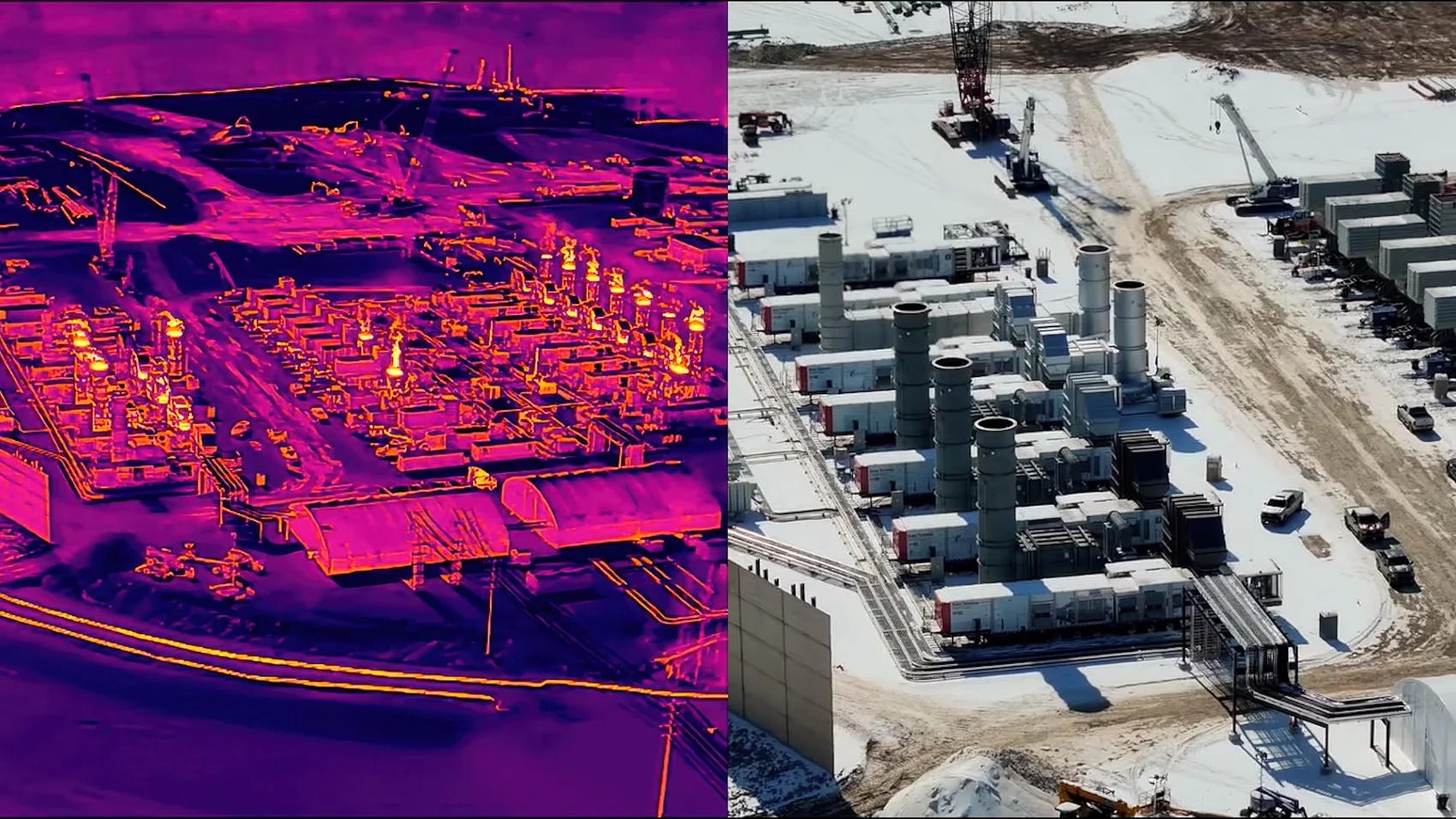
Somehow, the Supreme Court avoided making a lot of news last week—which means we should buckle up not only for this week, but also, as I explain below, for next week, too. But the Court’s relative quiet gives me an opportunity to write about one of the more substantively outlandish (and alarming) filings we’ve seen from the Trump Justice Department—and boy is that saying something: the motion to intervene (for the purposes of moving to dismiss) it filed last Monday in NAACP v. x.AI Corp. In that case, the NAACP is suing xAI under the Clean Air Act because the company allegedly built and is operating dozens of methane gas-burning turbines—27 at the time of filing; more than twice as many today—to power its Colossus 2 data center in Southaven, Mississippi, exposing nearby, predominantly Black communities to harmful emissions, and all without obtaining the air permits or pollution controls the Act requires for major sources of pollution.1
DOJ’s filing is remarkable in at least three respects. First, it argues that the NAACP’s suit threatens “American national, economic, and energy security by seeking to shut off the power supply for artificial-intelligence innovation that supports the Department of War’s military operations”—pointing to the military’s reliance on xAI’s Grok model for national security missions, including recent strikes against Iran.
Second, and even more significantly, it objects to all “citizen suits” under the Clean Air Act on constitutional grounds—claiming that decisions about whether to enforce federal law rest exclusively with the executive branch and cannot be overridden by a private citizen suit, even one Congress has expressly authorized. Thus, in addition to having the right to intervene in citizen suits brought under the Clean Air Act, DOJ claims the right to unilaterally have such suits dismissed. Third, and most gallingly, DOJ is making this argument in a context in which it is making no argument that xAI is acting legally. In other words, the central premise of DOJ’s submission is that xAI can be flagrantly breaking the law (and heavily damaging the environment), and only the executive branch of the federal government has the constitutional authority to do anything about it.
Needless to say, this is (potentially) a huge deal—and turns what was already a massively significant environmental fight over data centers and the corners companies are cutting to power them into an even bigger referendum on the question of who Congress can authorize to enforce the statutes it enacts.
More on that below. But first, the news.
On the Docket
The Merits Docket
The Court handed down (only) three more rulings in argued cases last Thursday, none of which were in any of the “big” cases for which we’re still waiting (more on those in a moment):
In United States v. Hemani, Justice Gorsuch wrote for a unanimous Court that the Second Amendment bars the federal government from prosecuting Ali Hemani—a Texas man who used marijuana a few times a week and kept a legally purchased gun at home—under the federal law that makes it a crime for an “unlawful user” of a controlled substance to possess a firearm. Justice Gorsuch rejected what he called the government’s “ambitious theory” that mere drug use could automatically strip someone of their Second Amendment rights—while pointedly leaving the door open to prosecutions on different facts. That narrowness may help to explain the Court’s unanimity, but beneath the surface, there are some real divisions here—led by Justice Jackson’s (in my view, persuasive) observation that cases like these prove that the framework of the conservative majority’s 2022 ruling in Bruen is wholly “unworkable.” (There’s also a rare two-justice concurrence in the judgment by Justice Alito that was joined by … Justice Kagan.) If nothing else, it’ll only be a matter of time before the Court has to confront the harder questions it ducked here—about exactly when the government can prohibit gun possession based on a defendant’s other behaviors.
In Hunter v. United States, Justice Kagan held for an 8-1(ish) majority that a defendant’s agreement to give up his right to appeal his sentence—a standard feature of countless plea deals—isn't always the last word. Rather, such an appeal waiver becomes unenforceable when honoring it would produce a “miscarriage of justice,” meaning defendants can in some circumstances challenge a sentencing condition despite having signed away their appeal rights. There were lots of separate concurrences here (and a dissent by Justice Thomas). The upshot is that the justices don’t all agree on how a defendant can establish the circumstances in which an appeal waiver will be unenforceable, but eight of them agree that such a showing is possible.
Finally, in a case only Federal Courts professors could love, a very unusual 5-4 majority in T.M. v. University of Maryland Medical System Corporation held that the “Rooker-Feldman doctrine” (a previously hyper-narrow rule that bars lower federal courts from hearing lawsuits that are tantamount to appeals of adverse state-court rulings by the party that lost in the rare circumstances in which ordinary preclusion doctrines don’t bar them) applies even when further proceedings in the state court are pending and/or possible. Justice Barrett’s dissent was joined by Chief Justice Roberts, Justice Kagan, and Justice Gorsuch. And I’ll confess to thinking that it has the better of the (nerdy, technical) arguments here.
Beyond those three rulings, the only other action on the merits docket last week came in Monday’s Order List, which included grants of certiorari in three new cases for next term, and two dissents by Justice Alito from denials of certiorari.
The Emergency Docket
There were no full Court rulings on emergency applications last week. But there are a pair of applications pending before the Court in which plaintiffs challenging Texas’s social media age verification law are asking the justices to put back into effect a district court injunction that had blocked a sweeping, new Texas law requiring age verification and parental consent for just about every mobile app (and app store) that’s accessible from anywhere in Texas. The Fifth Circuit had stayed the district court’s (pre-enforcement) injunction pending appeal, and the applicants are asking the justices to vacate that stay. Texas’s response to the applications is due by 4 p.m. (ET) today, so we may well get a ruling sometime this week.
The Week Ahead
Speaking of this week, we expect a regular Order List at 9:30 this morning. And the Court has already announced that it is expecting to take the bench to hand down more rulings in argued cases both tomorrow (Tuesday) and Thursday. We also know, because of what the Court did not say, that Thursday will not be the last hand-down day of the term. Given that there are still ~17 rulings to go, my best bet is that the Court will hold at least two more hand-down sessions after Thursday—probably across some combination of this Friday, next Monday, and next Tuesday. But all we know for now is that (1) we’re getting decisions Tuesday and Thursday; and (2) we’re almost certainly going into early next week before the Court rises for its summer recess.
The One First “Long Read”:
DOJ’s Limitless Arguments in the xAI Case
In trying to think about how to explain the importance of the xAI case, I was struck by how Earthjustice’s Laura Thoms (who used to work for the Department of Justice’s Environmental and Natural Resources Division—“ENRD”) opened her own piece in “The Watershed”:
Imagine living next to a factory that dumps waste into the river behind your house to save on treatment costs. Or a refinery that shuts off its pollution controls because no one is checking. You don’t need to care deeply about environmental laws to know that’s wrong. And you don’t need to be a legal expert to know that if you break the law, there should be consequences.
But the consequences for polluting are vanishing since Trump returned to office. And this week, his administration took an unprecedented step to derail environmental enforcement.
On the surface, the underlying dispute in NAACP v. x.AI Corp. is about gas turbines in northwestern Mississippi—the kind of dispute that tends not to receive national attention. But the legal theory the government is advancing reaches far beyond one (massive) data center and the power plants being built to power it. It is an Article II argument—rooted in the President’s duty to “take Care that the Laws be faithfully executed”—that, taken to its logical limits, would give the executive branch unilateral authority to shut down any citizen suit under any environmental statute, against any defendant, whenever the government decides that non-enforcement better serves its policy goals.
That claim, if accepted, would rewrite the enforcement architecture of the Clean Air Act, the Clean Water Act, RCRA, the Safe Drinking Water Act, and every other statute that contains a citizen-suit provision. It is a change not just in one case or one area of law, but in the basic relationship between the government, private industry, and the communities that have relied on these provisions as a last resort for half a century.
As always, let’s start with the facts: On April 14, the NAACP and its Mississippi State Conference sued x.AI Corp. and its wholly owned subsidiary, MZX Tech LLC, in the U.S. District Court for the Northern District of Mississippi, where the case landed before Chief Judge Debra Brown. The complaint is not exotic. It alleges that xAI built and is operating dozens of natural-gas turbines—27 when the suit was filed, and by the plaintiffs’ more recent count as many as 60—to power its “Colossus 2” data center in Southaven, just across the state line from Memphis, without ever obtaining the permits the Clean Air Act requires before such a facility may be built or run. By skipping the permitting process, the plaintiffs argue, xAI also evaded the “best available control technology” determination that federal law demands of major new pollution sources. The turbines, the complaint contends, are likely the single largest industrial source of nitrogen oxides in the greater Memphis area—pollution that falls hardest on a surrounding population that is disproportionately Black.
The plaintiffs’ cause of action is the Clean Air Act’s citizen-suit provision, 42 U.S.C. § 7604, under which the plaintiffs sent the statutorily required notice of intent to sue in February before filing in April. The relief they seek is similarly conventional: an injunction barring continued operation of the turbines until xAI obtains the necessary permits and pollution controls, civil penalties of up to roughly $124,000 per day of violation payable to the Department of the Treasury, and measures to offset the public-health harm in the interim. xAI’s defense, for its part, leans on a letter from Mississippi regulators telling the company that its “temporary” and “mobile” turbines did not require a permit at all—a reading of the law the plaintiffs insist is a loophole that simply does not exist. One need not be an environmental lawyer to understand that a state can’t give a private party permission to violate federal law.
Enter the United States.
On June 15, DOJ filed a 33-page motion not to weigh in as a friend of the court, but to intervene in the case—and, having intervened, to have the entire suit dismissed with prejudice. DOJ offered two justifications, and it is worth separating them, because they operate at very different levels. The first is national security. Supported by a sworn declaration from Cameron Stanley, the Pentagon’s chief digital and artificial-intelligence officer, the government argues that xAI’s Grok “Gov” model (the same one that appears to be responsible for the strike on an Iranian school) is one of only four AI systems that support mission-critical operations on classified networks, and that forcing the turbines offline would therefore “directly threaten ongoing national security interests.” ENRD wrapped this in the language of economic and energy security too, casting the NAACP’s suit as a threat to “the largest private investment in Mississippi’s history,” a claim that shouldn’t matter, of course, if that investment is responsible for blatant, ongoing violations of federal law.
But it’s the second justification that has turned this case into a bellwether: DOJ also argues that the Clean Air Act gives the United States a freestanding “right of dismissal”—that it may intervene in a citizen suit at any time and, once in, is “entitled to dismiss the entire action.” And it dresses this claim up in constitutional clothing: the “best interpretation” of the statute, the government says, is the one that “ensures the Executive Branch retains its primacy over the enforcement of federal law,” which is “also necessary to avoid grave constitutional problems with the statute’s citizen-suit provisions” under Article II. xAI has gone further still, arguing outright that the citizen-suit provision is unconstitutional because it vests federal law-enforcement power outside of the executive branch.
All of this is novel and troubling—and the two are closely connected.
As Erika Kranz of Harvard’s Environmental and Energy Law Program has documented, this is the first time the United States has intervened in a citizen suit against a private defendant for the purpose of arguing that the suit must be thrown out. And Kranz would know; like Thoms, she’s a former ENRD lawyer. History aside, it’s easy to see why this move is novel: the statute bars citizen suits only when the government “has commenced and is diligently prosecuting a civil action.” In other words, the entire structure presupposes that the government displaces private enforcement only by enforcing, not by choosing to do nothing and then slamming the courthouse door behind it. What DOJ is asserting is the mirror image of that design. It is not saying “we’ll take it from here.” It is saying that because it has chosen to do nothing, and because Mississippi has chosen to do nothing, the people breathing the air are required to do nothing, too.
DOJ’s strongest precedent only underscores how far it is reaching. It leans heavily on United States ex rel. Polansky v. Executive Health Resources, the 2023 Supreme Court decision holding that DOJ may intervene in and dismiss a False Claims Act qui tam suit over a whistleblower’s objection. But the analogy collapses on a single structural difference. In a qui tam action, the relator files in the government’s name, asserts the government’s injury, and recovers (a percentage of) the government’s money. In every respect, the claim in an FCA case belongs to the sovereign; Polansky simply held that the sovereign can reclaim a claim that belonged to it in the first place. When the NAACP sued xAI, it filed in its own name, asserted its members’ own injuries—nitrogen oxides in their lungs, elevated cancer risk in their neighborhoods—and sought an injunction to stop ongoing illegal pollution. The claim belongs to the plaintiffs. It has never belonged exclusively to the executive branch. The Clean Air Act, by statute, may bar such private suits when the government has chosen to prosecute. But other than that, it authorizes private citizens to bring their own claims in their own names. That’s never been thought to implicate Article II before.
To import Polansky here is to smuggle in the premise that defeats the analogy: that citizen suits are really the government’s cases in disguise. And if courts accept that premise, the consequence is immediate—every citizen suit filed under every environmental statute would become, in effect, a provisional enforcement action that proceeds only at the pleasure of the executive, subject to termination the moment the White House decides a defendant is more useful if left alone. They are not the government’s cases. That is the whole point of having a citizen-suit provision in the first place.
That is the through-line connecting the two halves of the motion. The national-security declaration is doing rhetorical work: it supplies the emergency that makes a breathtaking legal claim feel reasonable, even necessary. Strip away Grok and Iran, and what remains is the raw constitutional argument I flagged above—executive primacy over enforcement, full stop. If it prevails, the consequences won’t be limited to DeSoto County. The next beneficiary need not be a trillionaire’s AI company; it could be any polluter with a friend in the White House. The “veto power” the NAACP’s lawyers warn about is not a slippery slope; it’s a straight fall to the bottom.
Nor are the stakes here abstract. In the 1980s, when Massachusetts officials violated the Clean Water Act by allowing raw sewage to flow into Boston Harbor—and regulators did nothing—it was a citizen suit that forced the cleanup of one of America’s most polluted waterways. More recently, when ExxonMobil’s massive Baytown, Texas, refinery complex racked up more than 16,000 days of Clean Air Act violations over eight years—self-reported violations that the Texas Commission on Environmental Quality met with slap-on-the-wrist penalties—it was a citizen suit, brought by Environment Texas and the Sierra Club, that ultimately produced a record $14.25 million penalty and forced the company to answer for millions of pounds of unauthorized toxic emissions. That fifteen-year case went all the way to the Supreme Court, which declined to hear Exxon’s final appeal in June 2025. In both cases, the government had chosen not to enforce. Under the DOJ’s theory in NAACP v. x.AI Corp., those important and ultimiately successful private suits could have been killed with a single DOJ motion.
Ultimately, the Trump administration is asking a federal court to hold that the government’s unwillingness to enforce the law is itself a reason no one else may. That is not a national-security argument, however it is packaged. It is a claim about who gets to hold power accountable—and the answer the government is offering, for the first time in the citizen suit’s half-century history, is “only us, and only when we choose to.”
The most immediate response is, and ought to be, doctrinal. Chief Judge Brown should reject the DOJ’s motion to dismiss. No court has ever accepted the theory the government is advancing. As the Harvard EELP analysis notes, no court has held that the executive’s decision not to enforce displaces a citizen plaintiff’s congressionally created right to sue. District courts have uniformly upheld citizen-suit provisions against Article II challenges. And the text of Section 7604 answers the question on its own: a citizen suit is barred only when the government “has commenced and is diligently prosecuting a civil action.” The government has not commenced anything here. It has done the opposite.
But one district-court ruling will not end this—especially when, as seems inevitable, this case and/or these questions reach the Fifth Circuit. The broader Article II theory—that citizen suits impermissibly vest enforcement power in private hands—has been percolating in academic commentary and amicus briefs for years. This administration has now adopted it as its own. It therefore may be only a matter of time before this argument makes it to the Supreme Court, whether in the xAI case or elsewhere.
That means Congress has a role. It could amend Section 7604(c)(2) to say expressly what its structure already implies: the government’s right to intervene does not include a right to seek dismissal, and a decision not to enforce does not preempt a private action. A parallel fix across the Clean Water Act, RCRA, and every other statute with an identical provision would close the statutory door for good. Of course, that assumes a Congress that … does anything. But if and when such a legislature appears, this would (and should) be an uncontentious fix.
And then there is the argument that is bigger than any statute—bigger, in fact, than environmental law altogether. The Article II theory at the heart of the DOJ’s motion does not, by its own logic, stop at citizen-suit provisions in pollution statutes. If the executive’s constitutional primacy over enforcement means it can intervene to kill a private suit Congress expressly authorized, the same reasoning threatens every statutory scheme in which Congress gave private parties an independent right to enforce federal law: whistleblower protections, civil rights statutes, consumer-safety laws, securities fraud actions. The principle is the same in each—Congress decided that private enforcement was necessary because government enforcement alone would not be enough. If Article II now means the executive can veto those private actions at will, what Congress built as a system of redundant safeguards becomes a system of executive permission slips.
It’s worth thinking about what that would mean in practice. Title VII of the Civil Rights Act lets workers sue employers for discrimination when the EEOC declines to act. The Dodd-Frank Act lets whistleblowers bring retaliation claims when their agencies will not protect them. The Fair Housing Act lets individuals and organizations challenge discriminatory practices whether or not HUD lifts a finger. In each of these regimes, private enforcement exists for the same reason it exists in environmental law: because Congress recognized that the executive branch would not always have the resources, the will, or the political incentive to vindicate the rights it was charged with protecting. If the DOJ’s theory in NAACP v. x.AI Corp. becomes law, every one of those private enforcement mechanisms could be vulnerable to the same move—an administration that disagrees with a statute’s policy goals (or just happens to like the defendant) can simply intervene, assert executive primacy, and shut the case down. The worker suing for race discrimination, the whistleblower exposing fraud, the fair-housing organization challenging redlining—all would hold their rights at the beneficence of the very branch whose failures made private enforcement necessary in the first place.
Even before January 2025, it should’ve been readily apparent why enforcement of our federal rights should not depend upon the permission—or, at least, the acquiescence—of the federal executive branch. If courts eventually hold otherwise in the xAI case, it’s scary to think of where that logic would stop, or what it would empower the executive branch to do (or, in this case, to not do). All of that would be problematic enough with an executive branch that took its obligation to enforce federal law seriously. But that brings us back to the one thing that DOJ’s motion never argues—that what xAI is doing is actually legal (or that DOJ will itself sue xAI if it isn’t).
We talk a lot about the Trump administration’s own lawless behavior; this is a recipe for lawlessness by any private actor the executive branch likes (or can otherwise be persuaded, whether through legal means or otherwise, to leave alone).
SCOTUS Trivia: The First, First “Federal” Court
This week’s trivia was prompted by a weird anachronism in Justice Thomas’s concurrence in the T.M. case—in which he discusses the historical origins of the idea that giving one court the power to revise the judgments of another is necessarily “appellate.” To make a long story short, Thomas suggests that the first court created under the Articles of Confederation was one chartered in 1780. But as my friend and UC-Davis law professor Carlton Larson noted, the Articles of Confederation weren’t ratified until 1781 (when Maryland became the last of the 13 states to accede), so what Congress did in 1780 couldn’t have been pursuant to the Articles.
There are two nerdy pieces of trivia here, and I wanted to briefly flag both of them. The first is that the Second Continental Congress regularly exercised authority prior to 1781 pursuant to what might best be understood as an unwritten constitution—including the 1780 chartering of the court Justice Thomas identified in his T.M. concurrence. There is a rich debate about the exact sources of legal authority on which the Continental Congress was relying when it acted prior to the formal entry into force of the Articles of Confederation; what can’t be denied is that the Articles themselves couldn’t have been it.
The second is that the court to which Justice Thomas was referring is, by all accounts, the “first” adjudicative body ever to exist under the authority of the United States government—and it predated not only the 1780 Continental Congress enactment cited by Justice Thomas, but the Declaration of Independence itself. Specifically, the story of what became known as the Court of Appeals in Cases of Capture began on November 25, 1775, when the Second Continental Congress authorized the capture of enemy prizes and decided that prize cases would be filed in state admiralty courts, with a right of appeal to Congress itself.
At first, the Continental Congress farmed these appeals out to ad hoc committees of its own members—the first named on September 9, 1776—and then to a Standing Committee on Appeals created on January 30, 1777. Eventually Congress decided that letting legislators moonlight as judges wasn’t working. So on January 15, 1780, it stood up an actual court—three judges, charged with hearing all appeals from the state admiralty courts in cases of capture. A resolution of January 24, 1780, gave it the name “Court of Appeals in Cases of Capture,” and a further resolution of May 24, 1780, swept all the appeals still pending before Congress and its commissioners over to the new distinctly federal (or “confederate”) court.
Its docket was, true to its name, all about prizes: fights over whether ships and cargo had been lawfully seized by Continental warships and other American vessels, and over what should happen to the spoils. Only five men ever sat as its judges—William Paca, Titus Hosmer, Cyrus Griffin, George Read, and John Lowell. As for its demise: once the war ended and prize litigation dried up, the court effectively stopped functioning after 1787, and it was overtaken entirely by the new federal judiciary created under the Constitution and the Judiciary Act of 1789. Fittingly, the court’s records ended up in the custody of the very institution that succeeded it—the Supreme Court of the United States—in Section 12 of the Process Act, enacted on May 8, 1792.
All of this history is re-told in a fascinating 1977 monograph by Henry Bourguignon, titled The First Federal Court: The Federal Appellate Prize Court of the American Revolution, 1775–1787. As for the first federal court to open its doors under the U.S. Constitution, as I’ll explain in more detail in a future issue, that honor falls not to the U.S. Supreme Court, but to the U.S. District Court for the District of New York—which sat for the first time on Tuesday, November 3, 1789, 13 weeks to the day before the Supreme Court would first gavel into session. (This is part of why, to this day, D.N.Y.’s descendant—the Southern District of New York—is often referred to as the “Sovereign” District of New York.)
I hope that you’ve enjoyed this installment of “One First.” If you have feedback about today’s issue, or thoughts about future topics, please feel free to email me. And if you liked it, please help spread the word!
If you’re not already a paid subscriber and are interested in receiving regular bonus content (or, at the very least, in supporting the work that goes into this newsletter), please consider becoming one:
This week’s bonus issue will drop on Thursday. And we’ll be back with our regular content for everyone (no later than) next Monday. As ever, please stay safe out there.
I am a member of the board of Earthjustice—which is co-counsel for the plaintiffs in the xAI case. Needless to say, the views expressed herein are mine alone, and not necessarily those of Earthjustice, its co-counsel, or the plaintiffs.
The most fundamental problem is highlighted by the executive branch's argument that "the claim in an FCA case belongs to the sovereign; Polansky simply held that the sovereign can reclaim a claim that belonged to it in the first place." That argument is based on fundamental, profound and egregious misrepresentations about who and what is "sovereign" according to our Constitution and why and how powers were divided and allocated in our Constitution.
As many SCOTUS justices have acknowledged, the federal government is not sovereign. As the first words (and much more) of the Constitution established , "We the People of the United States" are sovereign. All federal officials are only public servants whose duty is to represent our interests.
The primary principle of our Constitution (the real meaning of the word "revolution") was overturning old-world attitudes about power (including the power of royals, nobles and clerics over the people). Our Constitution converted "the people" from mere "subjects" (of other people's power) into the true sovereign. So the People, ourselves, are the first power and everyone in any government is a representative of the people, a public servant. The People, collectively, are sovereign, as Justice James Wilson and Chief Justice John Jay emphasized in 1793 in Chisholm v. Georgia (https://www.oyez.org/cases/1789-1850/2us419) and as many SCOTUS justices have emphasized, e.g., in Alden v. Maine in 1999 (https://www.oyez.org/cases/1998/98-436) and in Citizens United in 2010 (https://www.oyez.org/cases/2008/08-205).
Irrefutably and clearly, “the Constitution begins with the principle that sovereignty rests with the people” inasmuch as “the people” did “ordain and establish the Constitution.” Alden v. Maine, 527 U.S. 706, 759 (1999). This was “an assertion that sovereignty belongs” to “the whole of the people.” Gundy v. United States, 588 U.S. 128, 152 (2019) (Gorsuch, Thomas JJ., Roberts, C.J., dissenting).
“In our system of government, ultimate sovereignty rests with the people, and the people have the right to control their own destiny.” Obergefell v. Hodges, 576 U.S. 644, 741 (2015) (Alito, Scalia, Thomas, JJ., dissenting). “[T]he critical postulate” of our Constitution is “that sovereignty is vested in the people.” United States Term Limits v. Thornton, 514 U.S. 779, 794 (1995). “[T]he animating principle of our Constitution” was “that the people” are sovereign and the “source of all the powers of government.” Arizona State Legis. v. Arizona Independent Redistricting Comm’n, 576 U.S. 787, 813 (2015).
In 2019, Justice Gorsuch, joined by Chief Justice Roberts and Justice Thomas in Gundy v. United States published a dissenting opinion to emphasize the following about the separation of powers and how it was designed to serve and support the liberty and the sovereignty of the people, not to protect the mere turf of any of our public servants:
"Our founding document begins by declaring that 'We the People . . . ordain and establish this Constitution.' At the time, that was a radical claim, an assertion that sovereignty belongs not to a person or institution or class but to the whole of the people. From that premise, the Constitution proceeded to vest the authority to exercise different aspects of the people’s sovereign power in distinct entities. In Article I, the Constitution entrusted all of the federal government’s legislative power to Congress. In Article II, it assigned the executive power to the President. And in Article III, it gave independent judges the task of applying the laws to cases and controversies."
The people who wrote or ratified our Constitution knew and believed that "enforcing the separation of powers isn’t about protecting institutional prerogatives or governmental turf. It’s about respecting the people’s sovereign choice to vest [certain] power in Congress alone. And it’s about safeguarding a structure designed to protect [the people's] liberties, minority rights, fair notice, and the rule of law." Clearly, "the framers afforded [judges] independence from the political branches in large part to encourage exactly [the] 'fortitude . . . to do [our] duty as faithful guardians of the Constitution.' ”
In Federalist No. 47, Madison elaborated on why powers were divided as they were in our Constitution. It was to protect the People from tyranny of purported public servants such as Trump and those who support his (and other presidents') unconstitutional usurpations of power:
"The accumulation of all powers, legislative, executive, and judiciary, in the same hands, whether of one, a few, or many" (no matter how they are given or usurp such power) "may justly be pronounced the very definition of tyranny." "[T]he preservation of liberty requires that the three great departments of power should be separate and distinct. The oracle who is always consulted and cited on this subject is the celebrated Montesquieu."
"Montesquieu" was famous for emphasizing the following. "There can be no liberty where the legislative and executive powers are united in the same person, or body of magistrates," or, "if the power of judging be not separated from the legislative and executive powers." "When the legislative and executive powers are united in the same person or body," says he, "there can be no liberty, because apprehensions may arise lest THE SAME monarch or senate should ENACT tyrannical laws to EXECUTE them in a tyrannical manner. " "Were the power of judging joined with the legislative, the life and liberty of the subject would be exposed to arbitrary control, for THE JUDGE would then be THE LEGISLATOR.
Were it joined to the executive power, THE JUDGE might behave with all the violence of AN OPPRESSOR."
As they are in this case, Trump and his supporters often merely presume or pretend that the principles of and text in our Constitution are irrelevant. Our Constitution was put into writing and made the paramount law of the land precisely to govern (and protect the People from) such false public servants.
There's an extra bit of irony in the xAI case. This case and Citizens to Preserve Overton Park v. Volpe (1971) were both filed by citizens of Memphis. Overton Park, where a citizen group sued to block a highway that would run through a city park, despite a law allowing such a path only when no feasible alternative was available, is considered an important precedent in establishing the right of citizen groups to sue to compel government agencies to enforce existing law.