

Welcome back to “One First,” a weekly newsletter that aims to make the U.S. Supreme Court more accessible to lawyers and non-lawyers alike. I’m grateful to all of you for your continued support, and I hope that you’ll consider sharing some of what we’re doing with your networks.
Every Monday morning, I’ll be offering an update on goings-on at the Court (“On the Docket”); a longer introduction to some feature of the Court’s history, current issues, or key players (“The One First ‘Long Read’”); and some Court-related trivia. If you’re not already a subscriber, I hope you’ll consider becoming one—and upgrading to a paid subscription if your circumstances permit:
The Court handed down three more decisions in argued cases last week (and is set to hand down more tomorrow at 10 ET). I wanted to use today’s “Long Read” to focus on one of last week’s decisions—the 5-2-2 ruling in Bost v. Illinois State Board of Elections, which held that candidates for office will generally have Article III standing (meaning, they’ll be proper plaintiffs) to challenge any alleged issues with the rules governing the counting of votes in elections in which they’re running. The obvious implication of Bost, as others have already noted, is to open the door to more litigation, especially on the far side of elections, by candidates who lost and are seeking to overturn the outcome in court. That strikes me as a profoundly dangerous development—not because those cases will succeed (Bost doesn’t change the substantive law at all; indeed, it allows candidates to sue even when it won’t change the result), but because even the specter of those lawsuits—and those lawsuits reaching the merits—could amplify claims of mischief and unduly erode public faith in the integrity of the electoral process.
But it also strikes me as deeply inconsistent for the Court to expand Article III standing doctrine on behalf of candidates for office when, both historically and recently, it has been so hostile to the Article III standing of those who win the elections—of legislators and the legislatures in which they sit. I’ll confess a profound amount of ambivalence about whether legislative standing ought to be more generous in the abstract; the relevant point for present purposes is that expanding candidate standing while continuing to restrict legislative standing appears to be yet another data point for the current Court’s inclination to limit legislative power especially when it’s being invoked in an attempt to rein in the executive branch.
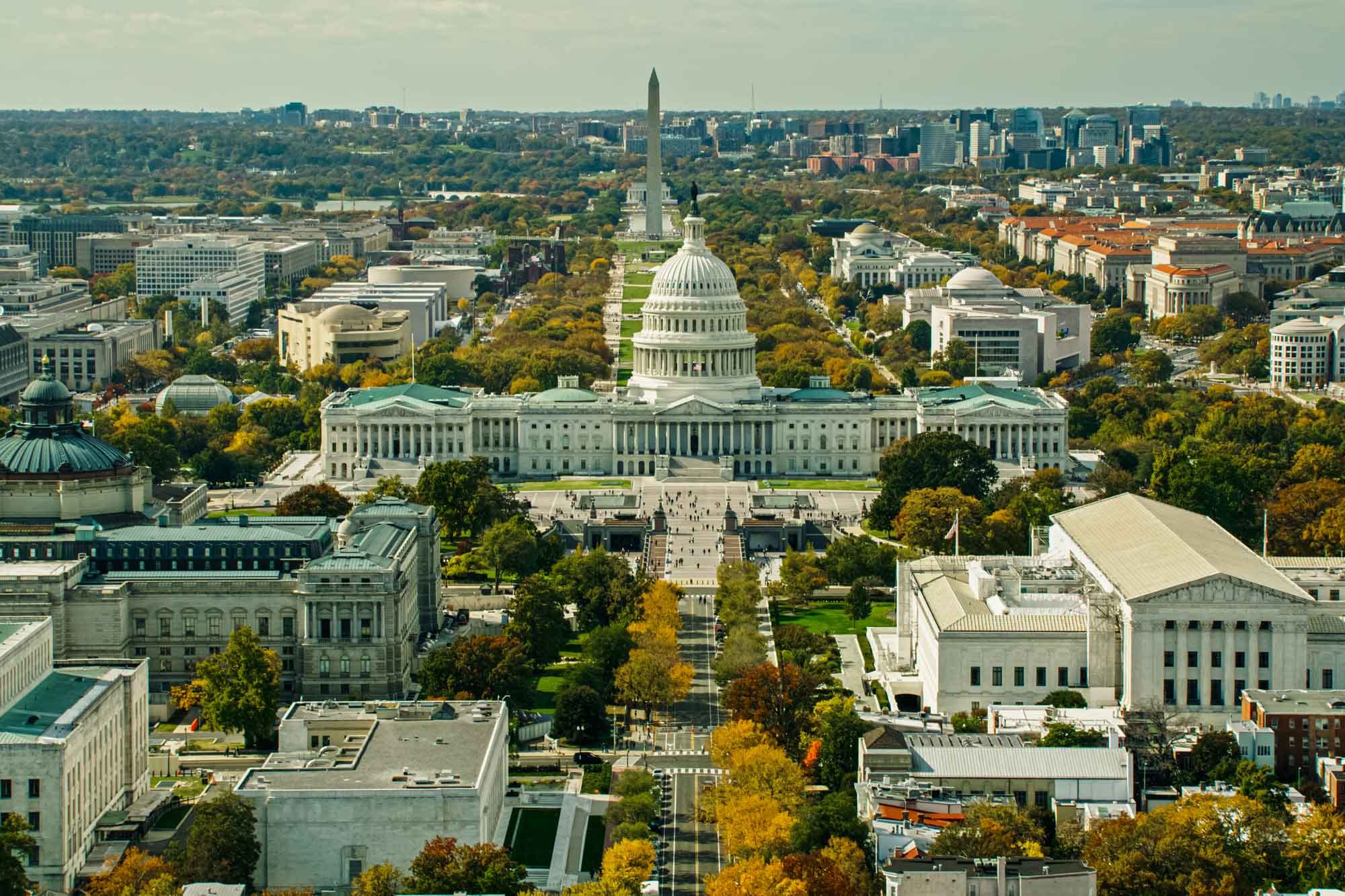
More on that below. But first, the (other) news.
On the Docket
The Merits Docket
After a quiet Order List last Monday, The Court handed down three rulings in argued cases on Wednesday—none of which were the tariffs case, but each of which were significant in their own right.
Justice Jackson had the majority opinion in Barrett v. United States,1 holding that two technical provisions of the federal firearms statutes are sufficiently similar in the conduct they proscribe that, absent a clear indication from Congress to the contrary, they do not allow for separate convictions for the same act. Justice Gorsuch wrote separately to note his view that he thinks there are serious double jeopardy problems with concurrent prosecutions for the same offense—and not just statutory interpretation problems.
Justice Kagan had the majority opinion in Case v. Montana, holding that the Fourth Amendment is not violated by a warrantless search of a home by law enforcement officers who have “an objectively reasonable basis for believing” that the homeowner intends to take his own life. (The Court had held in 2006 that the Fourth Amendment allows such warrantless entries to provide “emergency assistance”; Case clarifies that that includes when the homeowner is reasonably believed to pose an imminent threat to themselves.) Justice Sotomayor wrote a concurring opinion emphasizing that, where homeowners are experiencing mental health crises, “entering the house may not always be the objectively reasonable course of action to ‘preserve life or avoid serious injury,’” although she agreed it was here. And Justice Gorsuch wrote a concurring opinion to connect the majority’s holding to his broader, property rights-based view of the Fourth Amendment.
Finally, Chief Justice Roberts had the majority opinion in Bost, about which much more below. In a nutshell, Roberts held that candidates have Article III standing to challenge any election rules relating to the counting of votes. Justice Barrett, joined by Justice Kagan, concurred in the judgment on the narrower ground that the plaintiffs in Bost had alleged the kind of “pocketbook” injury that already suffices to establish Article III standing. And Justice Jackson (joined by Justice Sotomayor) dissented.
Among other things, this also means that the three Democratic appointees have now each filed a majority opinion from the October argument session. There were 10 distinct arguments in October, so it’s possible someone will end up with two opinions. But if it’s not one of the Democratic appointees, then that means that the initial assignment of the majority opinions in the six remaining cases (including, as most relevant here, the Louisiana redistricting cases) went to a Republican appointee.
The Court also added four more cases to its merits docket Friday afternoon—which should be the last cases the Court adds to the merits docket for the October 2025 Term, unless a late-breaking case gets expedited between now and June. The biggest of the four are, without question, the Monsanto case (about whether federal law preempts state-law tort claims arising out of Monsanto’s failure to warn that its popular weedkiller, Roundup, can cause non-Hodgkin lymphoma); and a federal criminal case (Chatrie) in which the justices will finally (if, perhaps, a bit too belatedly) take up whether the Fourth Amendment permits “geofence” warrants—under which law enforcement officials can obtain the identities of cell phone users who were in a particular area at a specific time. If the Court hands down opinions in each of the cases currently on its merits docket, that would leave it with a total of 57 signed opinions in merits cases argued during OT2025—right in line with where the Court has been since OT2019, but a much smaller merits docket than what was the norm as recently as a decade ago.
The Emergency Docket
The Court made no news on the emergency docket last week. There were no full Court rulings respecting applications; and no new applications from the Trump administration. One non-Trump application of note comes from California, where the Thomas More Society, on behalf of four parents and four teachers, is asking the Court to put back on hold a California state law that prevents school officials from informing parents and guardians about a student’s transgender identity, including their chosen name and pronouns, without the student’s consent (the law has an exception where such parental notification is deemed necessary to protect the student’s health or well-being). The district court had certified a state-wide class action and enjoined the law, only to have the Ninth Circuit stay that injunction pending appeal. Justice Kagan has ordered California to respond by Wednesday at 4 p.m. ET.
The Week Ahead
Notwithstanding today’s holiday, it’s setting up to be another busy week at the Court. We expect a regular Order List at 9:30 ET tomorrow (Tuesday), followed by one or more additional opinions at 10:00 ET (possibly including tariffs, but I still think it’s early). The Court then concludes the January 2026 argument session with a pair of arguments tomorrow and then, on Wednesday, the much-anticipated argument on the Trump administration’s emergency application asking the justices to allow him to remove Lisa Cook from the Federal Reserve board for “cause” (and without a hearing)—pitting Solicitor General Sauer against former Solicitor General Paul Clement.
After that, it’ll be quite some time before the justices take the bench again. After the regular Order List next Monday, the Court embarks upon its unofficial midwinter recess—and won’t hold another Conference until February 20 (and won’t retake the bench until February 23). Of course, there can always be movement on emergency applications between now and then, but that would be it.
Miscellaneous
I had thought about devoting today’s post to what’s happening in Minnesota. Having opted instead for something more SCOTUS-heavy, I thought I’d at least flag a couple of good places to learn more about the Insurrection Act both in general and as (potentially) applied to what’s happening in the Twin Cities, specifically:
My April 2025 background post on the domestic use of the military;
A video chat I had with Allison Gill last week (or my conversation with Mark Joseph Stern on the latest episode of Slate’s “Amicus” podcast); and
A typically thorough Isaac Chotiner New Yorker interview (with the Brennan Center’s Liza Goitein) on the topic.
The One First “Long Read”:
Article III Standing and Candidates vs. Legislators
To me, the best place to start in trying to explain the significance of Chief Justice Roberts’s majority opinion in Bost is Justice Barrett’s separate opinion concurring in the judgment. Barrett argues that “We need not deviate from established standing principles to resolve this case in Congressman Bost’s favor.” Thus, she and Justice Kagan would have held that Bost had standing on the narrower ground that, on the facts of this case, specifically, he had alleged the kind of “pocketbook” injury that usually suffices to establish standing. If that’s true, then that underscores that the majority is deviating from those principles—to establish a new basis for Article III standing, i.e., that, “As a candidate for office, Congressman Bost has standing to challenge the rules that govern the counting of votes in his election.”
It’s hardly a new criticism of the Supreme Court to suggest that its Article III standing jurisprudence has a remarkable tendency to be outcome-oriented—finding standing when a majority of the justices are sympathetic to the plaintiffs and/or their claims; rejecting it when they are not. But what’s striking about Bost is how breezily the Court waves its hands at the connection between Bost’s alleged injuries and Article III given how rigorous and demanding it has been when it’s not candidates for office, but the victors (that is, members of legislatures or the legislatures themselves), who are trying to bring suit. To that end, it may be useful to briefly outline the contours of the Court’s “legislative standing” jurisprudence.
First, the Court is generally hostile to legislative standing—the idea that legislatures (or legislators) have any special entitlement to sue to challenge the actions of other branches of government—such as when the President acts in violation of a statute; refuses to spend money Congress has appropriated; or otherwise subverts congressional prerogatives. Indeed, writing for the majority in Raines v. Byrd, Chief Justice Rehnquist specifically rejected the argument that members of Congress had standing to challenge the constitutionality of the so-called Line-Item Veto Act because they “have a plain, direct and adequate interest in maintaining the effectiveness of their votes.” Whereas the Court in Coleman v. Miller had held that legislators had standing in the specific context of executive action that purports to nullify the legal effect of a legislative vote, “There is a vast difference between the level of vote nullification at issue in Coleman and the abstract dilution of institutional legislative power that is alleged here.”
Second, that jurisprudence recognizes a handful of exceptions: Individual members have standing to challenge actions that injure them directly—such as Rep. Adam Clayton Powell Jr.’s challenge to the House of Representatives’ refusal to seat him. The Court has also recognized a state legislature’s standing to challenge whether a state ballot initiative giving congressional redistricting authority to an independent commission violates the federal Constitution. And although the Supreme Court has never had such a case, lower courts have recognized that congressional committees have Article III standing to enforce their subpoenas. But all of the exceptions only help to prove the general rule: The Court has been adamant that “legislative” standing is appropriate only in those cases in which the legislator or legislature can point to a concrete and particularized injury that they’ve suffered, as such—and not because of any broader interest in the enforcement of (or obedience to) laws they’ve enacted.
Against that backdrop, consider how Chief Justice Roberts justifies the expansion of Article III standing reflected in Bost:
[C]andidates also have an interest in a fair process. . . . Win or lose, candidates suffer when the process departs from the law. Thus, the long-shot and shoo-in alike would suffer harm if a State chose to conduct its election by, say, flipping a coin. The result of such an election would not reflect the will of the people, and the candidates would lose the opportunity to compete for the people’s support. So too, similar harms would result from less dramatic departures—for example, if a State decided to discard a random 10% of cast votes. Whether these decisions help, hurt, or have no effect on a candidate’s electoral prospects, they deprive the candidate of a fair process and an accurate result.
In other words, candidates have standing because even if the election would have come out exactly the same way without the rule they’re challenging, they’re still injured by the rule if it happens to be unlawful. No one disputes that a candidate can challenge election rules if they can show a direct injury as a result, but Bost holds that such a showing is no longer required. Being a candidate suffices—even a fringe candidate with no actual chance of having the litigation outcome directly affect them at all.
Both Justice Barrett’s concurrence in the judgment and Justice Jackson’s dissent explain the myriad logical flaws in this analysis. Here’s an excerpt from Barrett:
By holding that a candidate always has an interest in challenging votecounting rules, even if those rules do not impose a competitive disadvantage on him, the Court today relieves candidates of having to show any real harm. Candidates are apparently entitled to this extraordinarily forgiving rule because they are “not common competitors in the economic marketplace.” I cannot join the Court’s creation of a bespoke standing rule for candidates.
And here’s one from Jackson:
The Court thereby subtly shifts from our longstanding actual-injury rule to a presumption that certain kinds of plaintiffs are sufficiently aggrieved to satisfy Article III standing, regardless of whether they will experience any particularized harm. In my view, this dubious departure from settled law disregards both the equal treatment of litigants and judicial restraint.
I’ll just add one last point, which is the utter incoherence of a special standing rule for candidates, but not for legislators. Consider, in this regard, a lawsuit that Rep. Joyce Beatty (D-Ohio) has filed against President Trump and a host of other federal officials challenging the President’s unlawful attempt to rename the Kennedy Center (Rep. Beatty is also an ex officio member of the Kennedy Center’s Board).2 In a world in which the Supreme Court’s Article III standing jurisprudence generally considered plaintiff’s interest in the fairness and legality of the broader government process she was challenging, this would be an easy standing case; as both a member of Congress (which enacted the legislation the renaming is violating) and an ex officio member of the Kennedy Center’s Board, Rep. Beatty can claim an even stronger personal stake in the attempt to rename the Kennedy Center than Rep. Bost could claim in an election he was/is likely to win either way. But under the legislative standing doctrine we currently have, this is likely an uphill battle.
More than that, the incongruity between giving special solicitude to candidates but not to legislators or legislatures seems to reflect, yet again, the current Court’s hostility toward the lawmaking branches of government in favor of the executive branch. After all, as the Beatty case illustrates, legislative (or legislator) standing is most often at issue in challenges to executive branch action—a context in which, to quote again from Chief Justice Rehnquist’s opinion in Raines, “our standing inquiry has been especially rigorous.” That creates the reality that there is a large (and growing) body of executive branch action that is effectively immune to judicial challenge—because no person or institution can satisfy the “especially rigorous” standing approach the Court has adopted in those cases. But challenging election laws (invariably the product of … legislatures) apparently doesn’t demand the same especial rigor; any candidate can do it, no matter whether they actually stand to benefit if their lawsuit prevails.
To be clear, I am by no means an advocate for expanding legislative standing. There’s a lot to commend Chief Justice Rehnquist’s opinion in Raines and its explanation for why it’s better for our democratic system to leave those kinds of disputes to the political processes—including the concern that increasingly easy access to court will obviate the need for the other branches of government to find other pathways for resolving their disputes.
But as is so often the case with the Supreme Court’s Article III standing jurisprudence, it’s the inconsistency—if not the latent hypocrisy—that’s the real problem. One could potentially defend a system in which legislators and candidates were recognized as being entitled to special solicitude in standing analysis (although Justice Jackson’s dissent offers a powerful counterargument for how treating candidates that way subtly but significantly restructures the purposes and role of representation). And one could likewise defend a system in which neither received special solicitude (the one we had until last week). But a doctrine that treats candidates for office as most-favored plaintiffs when they won’t be if and when they win is a system that … doesn’t make sense—and that, yet again, seems to reflect unspoken but undeniable hostility to the constitutional and institutional roles and responsibilities of the lawmaking branches in our Republic.
SCOTUS Trivia: Justices Who Served in Congress
It seems an obvious observation that none of the current justices have ever served in Congress (indeed, none have ever held a public office to which they were elected). The most recent justice to serve who had been elected to any public office was Justice O’Connor, who was elected to the Arizona Senate in 1969 (and re-elected in 1971 and 1973). Whether this lack of comparable legislative background across the current bench has anything to do with the Court’s hostility to Congress … I leave to you.
But we have to go back quite a bit further to find justices who had also served in Congress. Here’s what I wrote in the trivia to a December 2023 issue of the newsletter:
The last justice to have also served in Congress was Justice Hugo Black (who had been a Senator from Alabama from 1927 to 1937, and did not retire from the Court until 1971). Technically, the last justice appointed to the Court with prior congressional experience was Justice Sherman Minton, who was appointed in 1949 (12 years after Black) after an earlier stint as a Senator from Indiana, during which he also served as Senate Majority Whip.
Minton was the 87th person appointed to the Court. Thus, after 31 of the first 87 justices (35.6%) had some form of congressional experience prior to joining the Court, none of the subsequent 29 have had the same.
Just to add one piece of trivia to the earlier issue, only one justice had also served as leader of either chamber of Congress: Justice Philip Barbour, who served as the tenth Speaker of the House (from 1821—23) before being appointed to the Court by President Andrew Jackson in 1836.
I hope that you’ve enjoyed this installment of “One First.” If you have feedback about today’s issue, or thoughts about future topics, please feel free to e-mail me. And if you liked it, please help spread the word!
If you’re not already a paid subscriber and are interested in receiving regular bonus content (or, at the very least, in supporting the work that goes into this newsletter), please consider becoming one:
This week’s bonus issue for paid subscribers will drop on Thursday. And we’ll be back with our regular content for everyone no later than next Monday (and, if I were a betting man, sooner). Have a great week, all!
The last part of Justice Jackson’s opinion spoke for only a four-justice plurality (joined by the Chief Justice and Justices Sotomayor and Kagan)—because it explained why legislative history, which has become disfavored among many conservatives, also supported the majority’s textual analysis.
A special shout-out and thank you to Ania Zolyniak (Harvard Law ’26) for e-mailing me to flag the Beatty case and its connection to the broader debate over legislative standing.
How on earth do we preserve the Republic and the Constitution with a group of SCJ hellbent on destroying it? They are destroying our legislative branches' power ahead of the probable change in majority of Congress in November's midterm election. Congress must make the necessary changes to the SC to stop the biased judicial coup, preferably now, but definitely after the midterms.
It seems clear that the current SCOTUS is out of step with Constitution. If the framers had believed in the Unitary Executive, it seems likely they would have created the Executive and described its powers in Article I, not Article II. I think the fact that the Congress has the power of oversight of the Executive branch and can, at least theoretically, remove a sitting president, renders the Unitary Executive's theory of presidential power empty.
In Marbury v. Madison, the Chief Justice essentially seized power that the Constitution had not given the SCOTUS. On one level that makes sense; there does seem to be a need to have a way to ultimately resolve difficult legal and constitutional questions. While I hesitate to write this in light of what the US Congress has done to itself by endlessly ceding power to the Executive and the reality of how divided this country is today, I do wonder if a constitutional amendment allowing a super majority of Congress to overrule the SCOTUS would make sense. No, I'm no pretending that amendments are likely or even possible in our current environment. However, if Congress passes laws such as the ones that SCOTUS ignored allowing Trump to fire legally protected individuals, then why would either party oppose an amendment protecting the powers of the legislature? I don't think the Democrats would, but who knows about the GOP -- it barely exists as an entity separate from the wishes of Trump.
Personally, the greatest weakness I see in this country is the electorate. November 5, 2024, demonstrated to me conclusively that our electorate in general is simply not up to the task of responsibly supporting democracy. Ignorance is a huge problem. Most Americans are extremely poorly informed about history, political science, and economics. The 2024 election also revealed an electorate that, in the absence of adequate knowledge and engagement in the system, can be swayed by wishful thinking. Relatively few voters last year had any real understanding of why and how we had faced post-pandemic inflation. Instead, they foolishly chose to blame the incumbent president and then compound their error by choosing to believe the frankly ridiculous promises of the most notorious liar in American political history. That hasn't changed. I can easily imagine a situation in which the Democrats take control of the House in 2027, wins majorities in both houses as well as the presidency in 2028 and then four years later after four years of Republicans obstructing the Democrats at every turn, the voters elect another right wing crazy to be president in 2032.
The Democrats' success in special and gubernatorial elections in 2025 were not, I believe what many Democrats want them to be. The Democratic Party is historically unpopular and disrespected. I am a life-long Democrat, but today I have no confidence in a party that is satisfied with the weak leadership of Chuck Schumer and Hakeem Jeffries. Schumer's idea of fighting for democracy in the face of an existential threat is to send a "sternly worded letter" to Trump. Both Schumer and Jeffries showed their weakness and lack of foresight by failing to give Zohran Mamdani the respect and support he deserved. Democratic congressional leadership is simply not up to the task before it. Once again, the electorate is at fault. Democrats don't have to elect weak candidates and Republican voters don't have to elect fascists, authoritarians, and absolute nut jobs. But they do.