

Welcome back to the weekly bonus content for “One First.” Although Monday’s regular newsletter will remain free for as long as I’m able to do this, I put much of the weekly “bonus” issue behind a paywall as an added incentive for those who are willing and able to support the work that goes into putting this newsletter together every week. I’m grateful to those of you who are already paid subscribers, and I hope that those of you who aren’t will consider a paid subscription—both to have full access to the bonus content and to more broadly support these efforts—if and when your circumstances permit:
One of my favorite one-liners about dissenting opinions belongs to Judge Henry Friendly—the highly regarded former Second Circuit judge for whom Chief Justice Roberts and Merrick Garland (among plenty of other legal luminaries) clerked. As Friendly wrote in an otherwise unexceptional 1960 decision, “dissenting opinions are not always a reliable guide to the meaning of the majority; often their predictions partake of Cassandra’s gloom more than of her accuracy.”
I was reminded of Friendly’s quip earlier this week while reading my friend and Harvard law professor Richard Re’s post, “The Dissenter’s Dilemma and Trump v. CASA.” Writing before yesterday’s oral argument, Re’s focus was on the two opinions penned by Democratic appointees last June in dissent from the Court’s narrowing of universal injunctions in Trump v. CASA, Inc. (the first tranche of birthright citizenship cases to reach the Court). To Re, “recent events have undermined claims made by the CASA dissenters,” specifically the concerns expressed by both Justices Sotomayor (in an opinion joined by Justices Kagan and Jackson) and Jackson (writing for herself) that the CASA ruling would make it much harder for courts to rein in executive branch lawlessness—with, to them, obvious (and ominous) consequences for the rule of law.
The “dilemma” Re identified is the conflict between a dissenter’s desire to “fuel outrage over a decision’s potential reach and to minimize the same decision’s actual consequences.” And as Re concludes, “to the extent that the [CASA] dissenters made testable claims, those claims have not been borne out. The dissenters’ doomsaying, in other words, can be viewed as both falsifiable and falsified.”
In one very limited respect, Re is correct. Not only did last June’s ruling in CASA impose no serious obstacle to the justices’ eventual consideration of the legal merits of President Trump’s birthright citizenship executive order, but lower courts were able, in the interim, to prevent that executive order from going into effect by pursuing procedural pathways to nationwide (or effectively nationwide) relief that CASA did not foreclose. From the specific perspective of President Trump’s effort to constrain birthright citizenship, it is objectively true that the dissenters’ concerns did not come to pass.
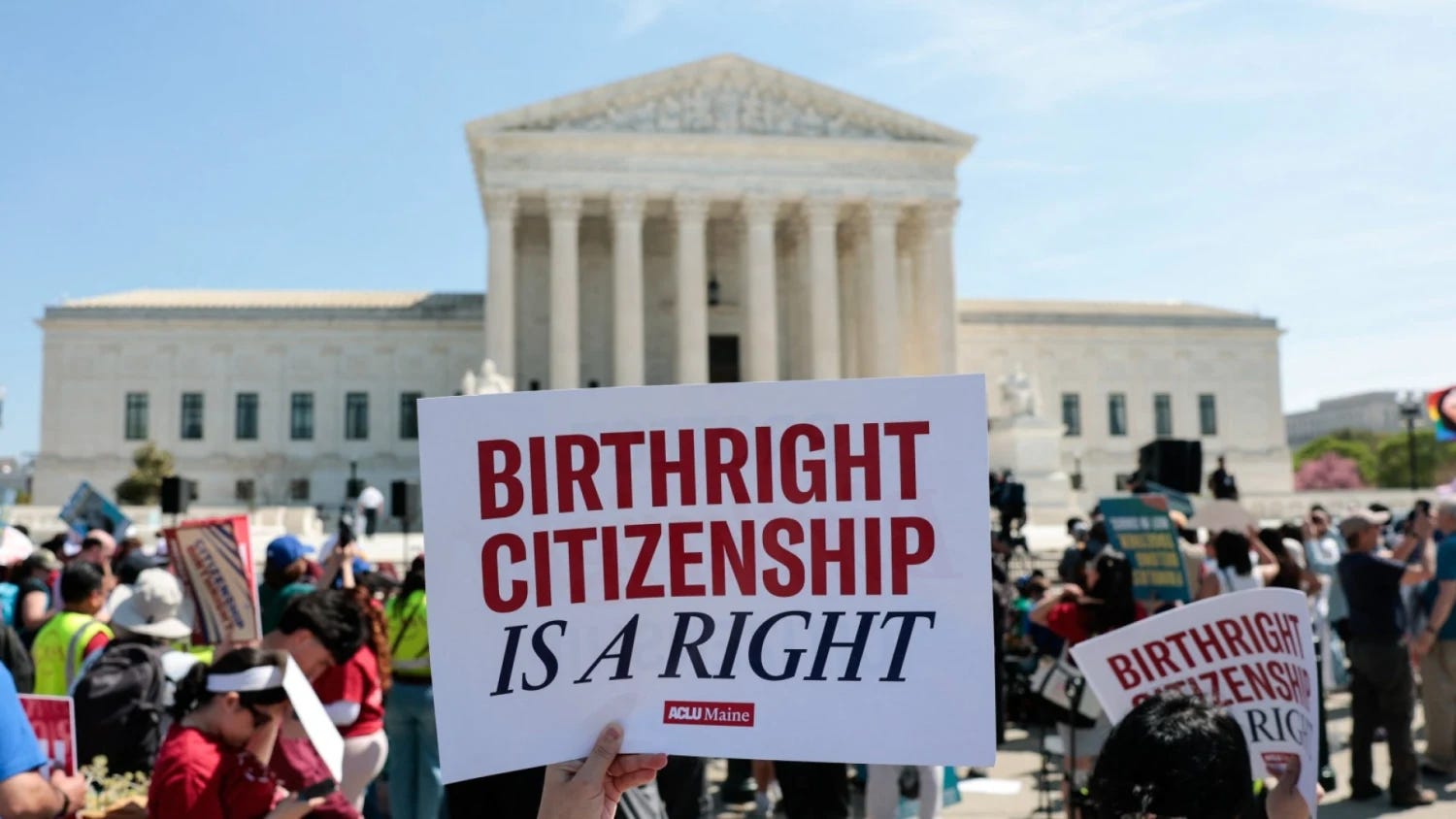
But what Re’s post neglects, as I pointed out in a New York Times op-ed that was published last night, is that the birthright citizenship case is an outlier in this exact respect—and deliberately so. The Trump administration appealed to the Supreme Court, and the justices agreed to hear its appeal, entirely because the government promised that it would. Indeed, that concession during the oral argument last May in CASA was a critical one—as reflected, among other things, in the fact that Justice Barrett went out of her way to memorialize it in footnote 18 of her majority opinion. The birthright citizenship issue was always coming back to the Court; the justices—from across the bench—made sure of it.
The government has made no similar promises about other cases—and the Court hasn’t asked for them. And appeals or no, one need not look far to find other contexts in which the pathways to nationwide relief that CASA left intact—Rule 23(b)(2) class actions; vacatur under the Administrative Procedure Act; or the modest remaining category of “universal” injunctions—have not been available in practice. The result in numerous contexts has been a combination of litigation chaos and an inability on the part of lower courts to rein in apparent executive branch lawlessness on a systemic basis—exactly what Justices Sotomayor and Jackson warned against in CASA.
Right after the CASA ruling came down last June, I wrote about how CASA’s real implications—and the accuracy of the dissenters’ predictions—would depend upon the answers to three different questions. And as I write this post nine months later, the jury is still out on … all three of them. The point is not that the CASA dissenters’ warnings were clearly correct; it’s that the lens of the birthright citizenship case—and only the birthright citizenship case—is a fundamentally flawed one through which to argue that they have already been proven wrong.
For those who are not paid subscribers, we’ll be back (no later than) next Monday with our regular coverage of the Court. For those who are, please read on.
