

Welcome back to the weekly bonus content for “One First.” Although Monday’s regular newsletter will remain free for as long as I’m able to do this, much of Thursday’s content is behind a paywall to help incentivize those who are willing and able to support the work that goes into putting this newsletter together every week. I’m grateful to those of you who are already paid subscribers, and hope those of you who aren’t yet will consider a paid subscription if your circumstances permit:
This week’s bonus installment is going to be relatively brief, for it’s focused on answering a question I often receive from my students:
Who is/was my favorite Supreme Court Justice?
Of course, I mess with them a bit (and assiduously avoid any current or living Justices): Favorite with respect to what? Favorite writer? Robert Jackson.1 Favorite person? Thurgood Marshall. Favorite scholar? Joseph Story. Favorite villain? Stephen Field. Favorite Texan? Tom Clark. Favorite Justice who could’ve done so much more? Wiley Rutledge.
I also talk about the Justices I do and don’t love teaching—often a function of how accessible and/or consistent their jurisprudence is (or, in one especially significant case, isn’t). But I know, as soon as I’m asked, what my real answer is. It may surprise some readers, but on any list of my favorite (non-current/living) Justices, John Marshall Harlan the younger is at the very top (sorry, Grandpa Harlan).
Unlike his grandfather and namesake, Harlan was a conservative, at least relative to most of the Justices he served with between 1955 and 1971. But he was also a fascinating legal thinker—and he thought out loud in the text of his opinions. His dissent in Poe v. Ullman is still one of the most thorough, thoughtful efforts to explain when and why the Constitution protects unenumerated rights (indeed, I usually teach it alongside Justice Douglas’s majority opinion in Griswold as what the Court should have said).
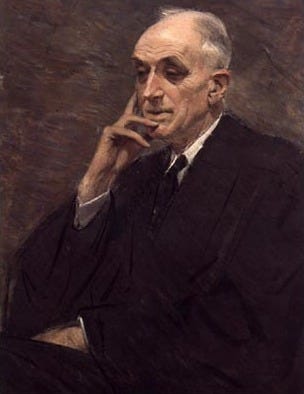
And in the more technical areas in which I spend most of my academic time (including the weeds of various Federal Courts doctrines), Harlan’s instincts, wherever they led him, were always to try to rationalize, on an intellectual level, the choices that the Court’s doctrines provoked. His concurring opinion in Bivens, on why the federal courts necessarily had the power to fashion judge-made damages remedies for constitutional violations by federal officers, remains, in my view, a defense of that power that the Supreme Court has never adequately rebuffed. And his views on retroactivity in post-conviction habeas petitions, although not views I share, represented an honest, thoroughgoing attempt to add judicial objectivity to a body of law that, to that point, had been deeply (and frustratingly) subjective.
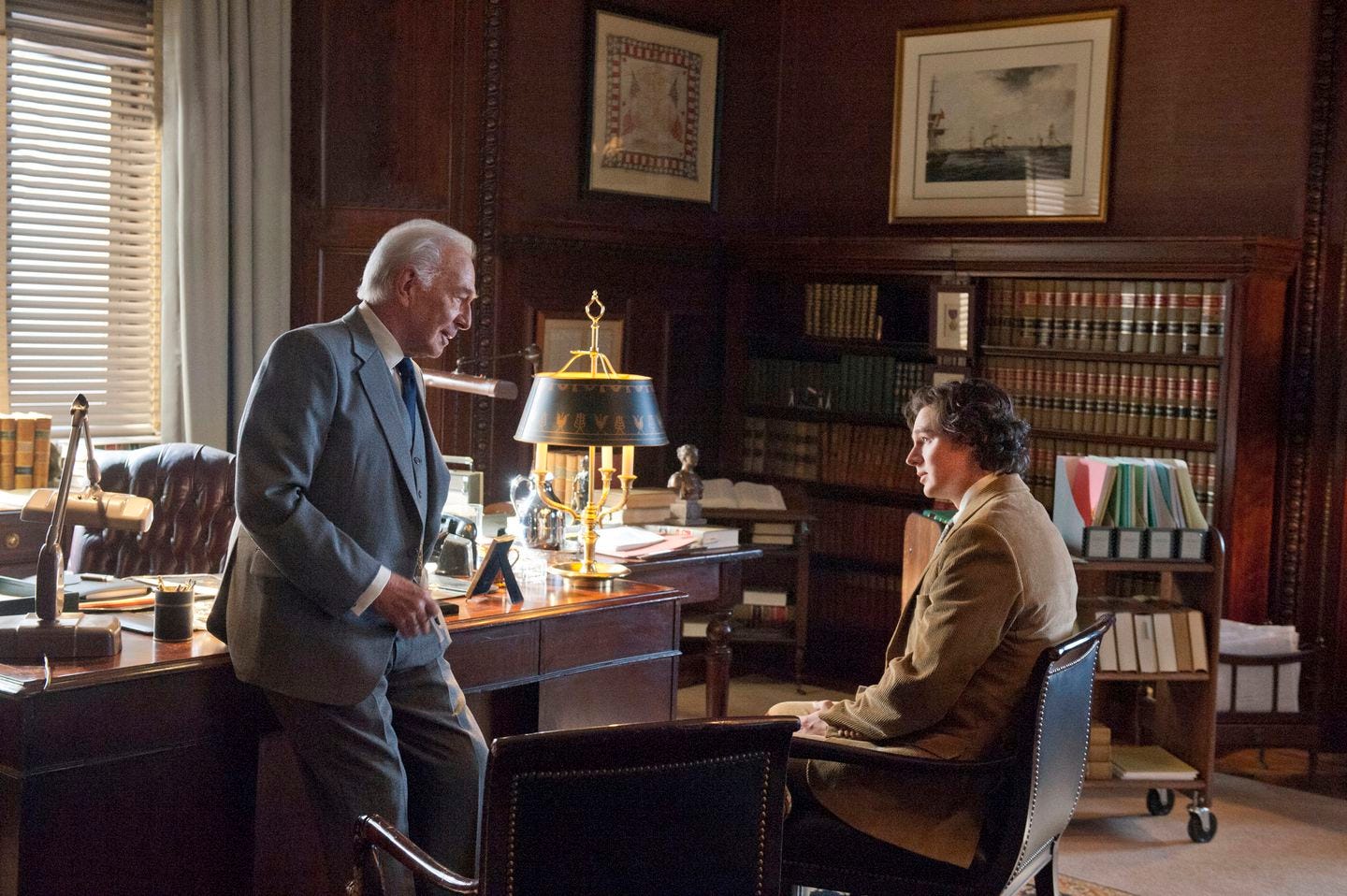
Although he’d surely be a “liberal” on today’s Court, Harlan was a Republican in every sense of the term as it was then understood. His politics were, for the most part, not my politics. But that’s part of why he’s my favorite “Justice.” Perhaps as much as anyone who served in the latter half of the twentieth century (there are more competitors in the first half), Harlan aspired to (and, in my view, achieved) a combination of fairness, impartiality, collegiality, and intellectual rigor that ought to be the archetype for the position. His staunchest adversary on the bench (Hugo Black) was also a close personal friend off of it. Indeed, one of my favorite things about the HBO movie “Muhammad Ali’s Greatest Fight” is Christopher Plummer’s powerfully subtle portrayal of Harlan—the only Justice who the movie doesn’t really caricature, if for no other reason than because his qualities don’t readily admit to exaggeration.
Other Justices may have accomplished more for substantive principles I believe in, or may have had more impact in shaping the Court into the institution it is today (for better or worse). But there’s a quality to Harlan’s contributions that I’ve never quite fully been able to put my finger on, but have always admired.
In eulogizing him in January 1972, Time magazine called him “The Judges’ Judge.” The piece also quoted Harvard law professor Paul Freund, who noted that “His thinking threw light in a very introspective way on the entire process of the judicial function. His decisions, beyond just the vote they represented, were sufficiently philosophical to be of enduring interest. He decided the case before him with that respect for its particulars, its special features, that marks alike the honest artist and the just judge.”
And that’s why, amid lots of competition, he’s my favorite Justice. At least for now.
Thank you for continuing to be a supporter of “One First.” Barring more breaking news between now and then, next Monday’s regular newsletter will feature the story (originally promised for this week) of the “Black-Jackson Feud,” one of the most famous (and spiciest) interpersonal rivalries in the Court’s history.
If you’re enjoying what you’ve been reading, I hope you’ll share it with your network and encourage others to also consider a paid subscription:
Have a great weekend, all!
Justice White supposedly once told one of his clerks that “he wrote beautifully.” When the clerk sheepishly thanked White, he retorted: “Justice Jackson had the same problem.”
My Favorite Justice” is such a meaningful title, especially when justice can mean something different to everyone. It’s interesting to reflect on the principles and decisions that shape our communities. I recently came across some helpful information while exploring https://summitcountypropertyappraiser.org resources. It’s always valuable to look at important topics from different perspectives and keep the conversation thoughtful.