

Welcome back to “One First,” a newsletter that aims to make the U.S. Supreme Court more accessible to lawyers and non-lawyers alike. I’m grateful to all of you for your continued support, and I hope that you’ll consider sharing some of what we’re doing with your networks.
If you’re not already a subscriber, please consider becoming one—and upgrading to a paid subscription if and when your circumstances permit:
The “base rate fallacy” is a term psychologists and statisticians use to describe how, when we judge how likely something is, we tend to fixate on the details in front of us and forget how rare the thing was to begin with. The classic example is a screening test for a rare disease. When the thing you’re screening for has a very low incidence, even an accurate test administered to a large population will flag far more people who don’t have the condition than who do. For instance, a test that catches 999 of every 1,000 real cases, and wrongly flags only 1 of every 1,000 healthy people, sounds terrific. But run it across a population of 100 million people where the condition turns up about once in every 400,000, and nearly everyone it flags will turn out to be fine. Of the roughly 100,250 people the test will flag, only about 250 actually have the condition. The other 100,000 (~99.75 percent!) are false alarms, even though the test is exceptionally accurate.
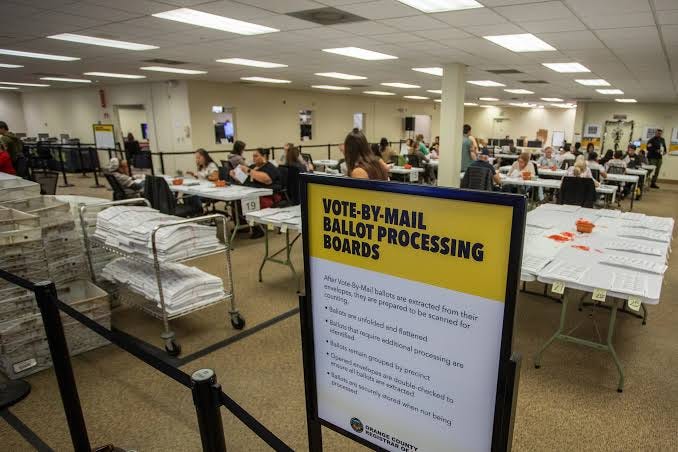
As we head into tomorrow’s elections, I have base rates on the brain, largely because the Trump administration’s fight with California over roughly 20,000 mail ballots is really a fight about them. So I want to use today’s “Long Read” to make two points that the California litigation—and most of the coverage thereof—has buried, but that we’d all do well to remember: American electorates are enormous, and ineligible voting in our elections is exceedingly rare.
That means the question that should worry us is not whether a handful of ineligible ballots get counted. It’s how many eligible voters we’re prepared to disenfranchise in the course of hunting for ineligible ones. I certainly don’t endorse voting by anyone who isn’t legally registered to do so. But (1) such voting is statistically insignificant once we take the denominator into account; and (2) it’s just as problematic, if not more so, to formally or functionally disenfranchise significant numbers of eligible voters in the name of preventing such a marginal number of ineligible votes (that’s where the base rate comes in). On both of these points, the California case is a pretty good—and troubling—illustration.
More on all of that below. But first, the Supreme Court-specific news.
On the Docket
The Merits Docket
It was another quiet week on the merits docket. The Court didn’t issue any regular orders, so no new cases were added to the roster for the October 2026 Term. We’re currently at 34 merits cases, two of which are consolidated—so 33 arguments in granted cases to date. If the Court’s recent pattern (since OT2019) holds, that should be a little more than half of the total cases the Court will resolve through plenary review between now and next summer.
The Emergency Docket
The only formal action by the full Court last week was Tuesday’s denial, over no public dissents, of the emergency application in City of Baltimore v. Texas. I wrote in detail about that case for last Thursday’s bonus issue.
Once more, the real news on the emergency docket is the Court’s inaction on several high-profile pending applications—including the K.M.K. case (about the challenge to Washington state allowing a wrestler who identifies as a transgender woman to compete in high school competitions), which has been fully briefed since October 15; and the Trump administration’s application in the border wall case, which is also now fully briefed. It’s a good bet that we get one or both of those rulings between now and Friday.
The Week Ahead
The justices will be back on the bench at 10 ET this morning for the beginning of the November argument session, which features a total of seven arguments over five days (M–W this week; M–T next week). The next Conference is scheduled for this Friday, which should lead to a full Order List next Monday (November 9) at 9:30 ET.1
The One First “Long Read”:
“I Was Told There Would Be No Math…”
In July, DHS announced that as many as 190,000 noncitizens might be on California’s rolls, and then gave the state nothing more until after ballots went out. In October, DOJ sent state and Los Angeles County officials a list of more than 20,000 “likely” noncitizens (on a thumb drive), gave them 48 hours to review it, and sued on October 15.
Los Angeles County, to its credit, actually checked. Of the 20,930 records, 7,035 had county addresses. In a sample of 200 of those 7,035, 112 belonged to canceled or inactive registrations, so no ballot had been mailed to them at all. More than 71 percent had never voted. And among records that meaningfully reported a birthplace, 38.9 percent listed the United States, which the county called “strong evidence of citizenship.” A U.S. Citizenship and Immigration Services (USCIS) official told the court that the agency’s records showed none of the sampled people were U.S.-born, though he acknowledged 189 records with “minor data discrepancies.” On Saturday, a UCLA analysis reported that 8,880 names (42 percent of the list) didn’t match anyone on California’s current voter file. It further estimated that nearly 7,500 naturalized citizens were “highly likely” to be wrongly flagged.
The courts, to put it mildly, have not been impressed. After the Ninth Circuit on Monday rejected a premature DOJ appeal, Judge David Carter denied a temporary restraining order last Wednesday, holding that DOJ likely lacked standing and a cause of action and that its remedy would likely violate federal voting laws. He noted that DOJ had charged 28 alleged noncitizens the same day it sought emergency relief. “Go out and indict,” he said from the bench. On Friday, a divided Ninth Circuit panel refused DOJ’s request for emergency relief from Carter’s Wednesday ruling, accepting the finding that DOJ’s process was “not credible.” Meanwhile, county employees have been subpoenaed to appear before a federal grand jury on November 4, the morning after Election Day.
The numerator and the denominator
Fights about election “integrity” are, in an important sense, fights about a fraction. We spend almost all of our time arguing about the top half of it. It seems worth taking a minute to talk about the bottom half, too.
After the 2016 election, the Brennan Center surveyed officials in 42 jurisdictions with large noncitizen populations. Those officials oversaw 23.5 million votes and referred about 30 suspected incidents of noncitizen voting, or roughly 0.0001 percent (so roughly one ineligible vote for every 780,000 total votes). In 2024, Georgia’s Republican Secretary of State ran what he called the most comprehensive citizenship check in the state’s history. It found 20 noncitizens among 8.2 million registrants, only nine of whom had ever voted (across multiple elections), mostly before 2012. That’s 1.1 ineligible votes per million. This summer, DHS told Nevada it might have 15,903 noncitizens on its rolls, then conceded it had confirmed only 185. Nevada checked and reported back that “our records indicate that they were [all] citizens.”
To be clear, none of this means the number of noncitizens on these voter rolls is zero. As noted above, Georgia did find 20 such registered voters, DOJ has charged 28 more in California, and those cases ought to be taken seriously. But the relevant comparison has never been between some ineligible voting and no ineligible voting. It’s between some ineligible voting and the costs of the tools we use to find it.
Running the numbers
Here’s a deliberately simple illustration, using my numbers rather than anyone’s findings: California has about 23 million registered voters. At Georgia’s rate of roughly one noncitizen per 410,000 registered voters, you’d expect something like 56 noncitizens on the rolls. Now assume that DHS has a screening tool with a false-positive rate of just 0.1 percent (I am very skeptical that such a precise tool exists, but work with me). Run across 23 million records, it would flag about 23,000 citizens. Even if it caught all 56 noncitizens, more than 99.7 percent of the flagged names would be eligible voters—who would all be at serious risk of disenfranchisement.
DOJ’s list, for what it’s worth, has 20,930 names. No one outside the government knows what methodology was used to create it. Nor do we have any idea what the false-positive rate is (or any reason to believe that the false-positive error rate is less than 0.1 percent). And when the true rate (of noncitizens on voter rolls, let alone noncitizen voting) is that low, a list of 20,000 “likely” noncitizens is roughly what you’d expect from noise alone. Even a modest error rate, multiplied by a denominator in the tens of millions, will swamp a numerator that may be, at most, in the dozens.
The dilution concern runs both ways
The government’s best answer is dilution. Bill Essayli, the not-quite-U.S. attorney in Los Angeles, framed the “ongoing emergency” as one that “disenfranchises American citizens through dilution,” and one of Judge Patrick Bumatay’s two dissents from last week’s Ninth Circuit doubleheader likewise warned that counting the suspect ballots would threaten “to dilute the vote of eligible citizens.” I don’t doubt that an unlawful ballot dilutes lawful ones. But even assuming noncitizens on the voter rolls are also voting (because dilution isn’t an issue if they’re not), dilution is a two-way street. An eligible citizen voter whose ballot is set aside loses her vote entirely, and that distorts the tally every bit as much as a wrongly counted noncitizen vote does. And although you wouldn’t know it from Essayli or Judge Bumatay, once the base rates are back in the picture, the wrongful exclusion side of the ledger is larger than the wrongful inclusion side—by more than two orders of magnitude.
There’s also a difference in the kind of error involved. Scattered individual mistakes in a giant electorate tend to wash out. A screening program, by contrast, tends to make the same mistake over and over, and against the same kinds of people, including naturalized citizens and people with stale or incomplete records. The UCLA estimate about naturalized citizens is a warning on exactly this point, as is the researchers’ observation that voter ID numbers were apparently stripped from the list.
“What’s the harm in checking?”
The response I’ve heard most often from those defending DOJ’s position is that, even if the list is imperfect, there’s no harm in checking. That argument, too, depends on completely ignoring the base rate problem.
DOJ didn’t ask for an investigation on a normal timeline; it wanted an order, on 48 hours’ notice and in the middle of an election, to segregate every listed voter’s ballot and not count it until her citizenship was verified. Yet DOJ’s own complaint conceded that it was “not practicable or feasible” for federal investigators to look into “thousands, let alone tens of thousands,” of these voters before the election ended, and the county has no citizenship information beyond each voter’s sworn attestation. The upshot is that a voter who swore under penalty of perjury that she’s a citizen becomes a suspect because a database (of not-exactly-clear provenance) said so.
Congress has also, in a sense, already answered the question. The National Voter Registration Act (NVRA) bars systematic removal programs within 90 days of a federal election—precisely because last-minute sweeps catch eligible voters with no time to fix the error. Indeed, among lots of other things, Judge Carter found that DOJ’s request would probably violate that rule.
Nor is anyone arguing that the government can’t ever go after illegal voters. It can, through individualized investigation and prosecution, with the burden on the government. Even Judge Bumatay acknowledged that California “appears correct” that prosecution remains available after the fact. What DOJ wanted instead was to put the burden on 20,000 voters at once, after sitting on DHS’s claims since July. Two Ninth Circuit judges called that emergency, at least in part, “a self-constructed one.” And when the next step is grand jury subpoenas for the people counting the ballots, it gets harder and harder to describe all of this as just “checking.” To the contrary, it seems like a calculated effort to use the specter of noncitizen voting as a mechanism for both (1) kicking a lot of eligible voters (of particular demographic groups) off the voter rolls; and (2) sowing the seeds of doubt about the integrity of the results. If the choice is between potentially counting 50 ineligible votes and not counting thousands of eligible votes (again, in a state with 23 million voters), I would like to think that we’d all pick the former.
What the Ninth Circuit’s dissents miss
Last week’s three relevant Ninth Circuit opinions (the two rulings in United States v. California and the separate but related denial of en banc rehearing in California Nurses Association v. Mullin) are worth reading in full, in part because the dissents illustrate the base rate problem better than any hypothetical I could have come up with.
Friday’s unsigned majority opinion in United States v. California recounted the district court’s findings that the government offered “no error rates” or “validation against a reliable benchmark,” and that “[i]t remains unknown how Lexis Nexis performed its analysis.” DOJ, in other words, wanted a list of more than 20,000 names used to sequester potentially thousands of ballots on the strength of a tool whose false-positive rate nobody has yet disclosed.
Judge Bumatay, who had also dissented from the dismissal of the government’s first appeal earlier in the week, dissented from the denial of a stay on appeal #2. He framed the case as about the federal government’s power “to stop this potential attack on the integrity of our elections.” And he called DOJ’s request “a modest remedy” that “would not cancel any vote” while faulting California’s “lax system for verifying citizenship.” He also noted that when the government ran the county’s sample through its own systems, “it confirmed that none were born here,” while the county offered nothing “beyond the say-so of the potential voters themselves.”
That’s certainly the strongest version of the government’s case. But it rests on an unspoken (and deeply contestable) assumption on which the entire argument depends. When two sets of records disagree about the same person, someone has to bear the risk that the government is wrong, and Bumatay puts that risk on the voter. Her “say-so,” though, is a citizenship attestation under penalty of perjury, the one the NVRA’s federal mail registration form is built around, as Judge Mark Bennett explained. California also requires “extraordinary proof” to challenge a mail ballot. What Bumatay calls a “lax system,” in other words, reflects a deliberate choice about who should bear the risk of error, and I’d argue that it’s an eminently sensible one in a system in which nearly everyone who gets challenged turns out to be eligible. Again, properly accounting for the base rate problem would—or, at least, should—properly shape the legal analysis.
As for “would not cancel any vote,” the majority pointed out that treating the list as proof would require canceling registrations under California law. Judge Bennett identified “a material risk” that verification couldn’t finish before certification. A ballot that’s segregated and never cleared is, for all practical purposes, a vote lost. Indeed, DOJ’s own theory was that continued processing causes “untraceable disenfranchisement.” DOJ is right that wrongly counted ballots dilute the votes of lawful voters; the evidence just suggests far more disenfranchisement on the other side. And when Judge Bumatay invoked the risk to “a close election,” Judge Gabriel Sanchez had the answer: the uncounted ballots the government was seeking “could be greater than the margin of victory in races.” It’s exceedingly unlikely, in contrast, that that the same could be said about any ineligible votes.
Judge Eric Tung’s dissent from the denial of rehearing en banc in the California Nurses case (a challenge to DHS’s door-to-door investigations of suspected noncitizen voters) is, if anything, more revealing. A district judge had barred, through Election Day, field operations likely to involve people the government should suspect are citizens. Writing for seven judges who dissented from the denial of rehearing en banc (on a court with 29 active judges), Tung accused that judge of having “confused investigation for intimidation.” He rejected the plaintiffs’ standing in part because “[b]oth USCIS and HSI would have to miss the citizen in their respective reviews.”
But a second layer of review helps only if each layer is reasonably accurate and their errors are independent of each other. We don’t know either layer’s error rate, and both draw on overlapping government records, so a naturalized citizen whose old immigration file was never updated is likely to trip both. Nor do we have to guess how this pipeline performs. Judge Bennett described the California list as the product of the same two agencies, and the 185 Nevada names that had gone through “manual review” all turned out to be citizens.
Judge Tung’s answer to these kinds of mathematical points is to assert that it misses the point to doubt how much fraud exists, because “even the appearance of impropriety” undermines public confidence. But if appearances are enough, the actual numerator will never matter (to say nothing of the denominator). That’s about as good a summary of the problem as I can offer.
None of these dissents is the law, of course. But they’re a pretty good summary of what too many folks appear to genuinely believe—and also of what the Supreme Court will have to confront if Essayli is right that this case is headed its way. These arguments share the same blind spot—treating the government’s interest in stopping ineligible votes as concrete and the risk to eligible voters as abstract. The arithmetic suggests it’s entirely the other way around. Judge Carter put it best in just ten words: “A ballot segregated, in effect, would be a ballot removed.” If the government can demand the segregation of ballots on the strength of a list like this one, it will remove thousands of lawful votes to reach, at most, a few dozen unlawful ones.
***
Even though Election Day is tomorrow, and there’s no sign of DOJ seeking Supreme Court intervention before then, this dispute could be far from over. Judge Carter plans to rule on a preliminary injunction after a November 13 evidentiary hearing with a special master. Essayli has said he expects the case to reach the Supreme Court (at some point?). And the grand jury subpoenas suggest the pressure on election workers will get worse before it gets better.
But whatever happens in court, I hope the broader lesson sticks. The serious risk to our elections was never the 20 Georgians or the 30 suspected cases out of 23.5 million votes in the Brennan Center’s survey. It’s the screening programs, purges, and documentation rules, each defended in the name of a tiny numerator, that quietly remove a larger number of eligible voters from a very large denominator. Until we start asking how many eligible voters a given rule disenfranchises for every ineligible voter it stops, we’re going to keep getting that tradeoff wrong. I hope folks keep that in mind when the results start coming in tomorrow—and especially as politicians, pundits, and everyone in between try to raise amorphous “election integrity” concerns without accounting for the base rate problem.
Math, it turns out, matters.
SCOTUS Trivia: Go Vote!
No trivia today. Just a link to the League of Women Voters’ “VOTE411” website, which can provide you with specific information about what’s on your ballot (if you’re already registered)—and, in states with same-day registration, how you can still register.
If you haven’t voted yet, and you can, I sure hope you will.
I hope that you’ve found this installment of “One First” useful. If you have feedback about today’s issue, or thoughts about future topics, please feel free to e-mail me. And if you liked it, please help spread the word!
If you’re not already a paid subscriber and are interested in receiving regular bonus content (or, at the very least, in supporting the work that goes into this newsletter), please consider becoming one:
This week’s bonus issue for paid subscribers will drop on Thursday. And we’ll be back with our regular content for everyone (no later than) next Monday.
From now on, I’ll list my own events into a footnote at the end of the “Week Ahead” section. Two to flag this week:
On Wednesday, I’ll be joining Ryan Goodman and Mary McCord for a panel at George Washington University as part of its series of symposia on “Government Oversight and Accountability.” Our focus, in particular, is “Judicial Actions and Legal Parameters.” The event is from 12–1:30 p.m. in Room 405 of GW’s Cloyd Heck Marvin Center, but it will also be streamed on Zoom (details here).
And on Thursday, I’ll be joining D.C. Circuit Judge J. Michelle Childs and Nina Totenberg for a plenary session at the ABA’s 20th Annual Labor and Employment Law Conference here in D.C. We’ll be talking about the role of courts in our constitutional system from 4–5:30 p.m.
Thanks for the information on the League of Women Voters’ “VOTE411” website.
I hope turn out for this election is massive. Our politicians need to know that we are paying attention, whether we vote Democratic or Republican.
While I don’t have the exact quote, I read that Judge Bumatay’s second dissent claimed the majority failed to take the government’s argument at “ face value”. Given DOJ’s performance over the past year and a half, that’s an extraordinary assertion.