

For the better part of the last sixteen months, a lot of what I have written in this space has been, in one way or another, in defense of the federal district courts. As President Trump and his subordinates and supporters have escalated their rhetorical (and sometimes more than rhetorical) attacks on individual trial judges; as members of Congress have introduced bills to strip district courts of jurisdiction, cap their remedial powers, or impeach them for adverse rulings; and as a steady drumbeat of online invective has tried to recast every adverse ruling as a bad-faith act by a partisan judge, I have tried to make the case—repeatedly, and I hope persuasively—that most district judges are doing the unglamorous, constitutionally indispensable work of applying law to facts. And I don’t think it’s an exaggeration to suggest that the institutional legitimacy of the federal courts depends in no small part on the public’s continued willingness to trust them to do it.
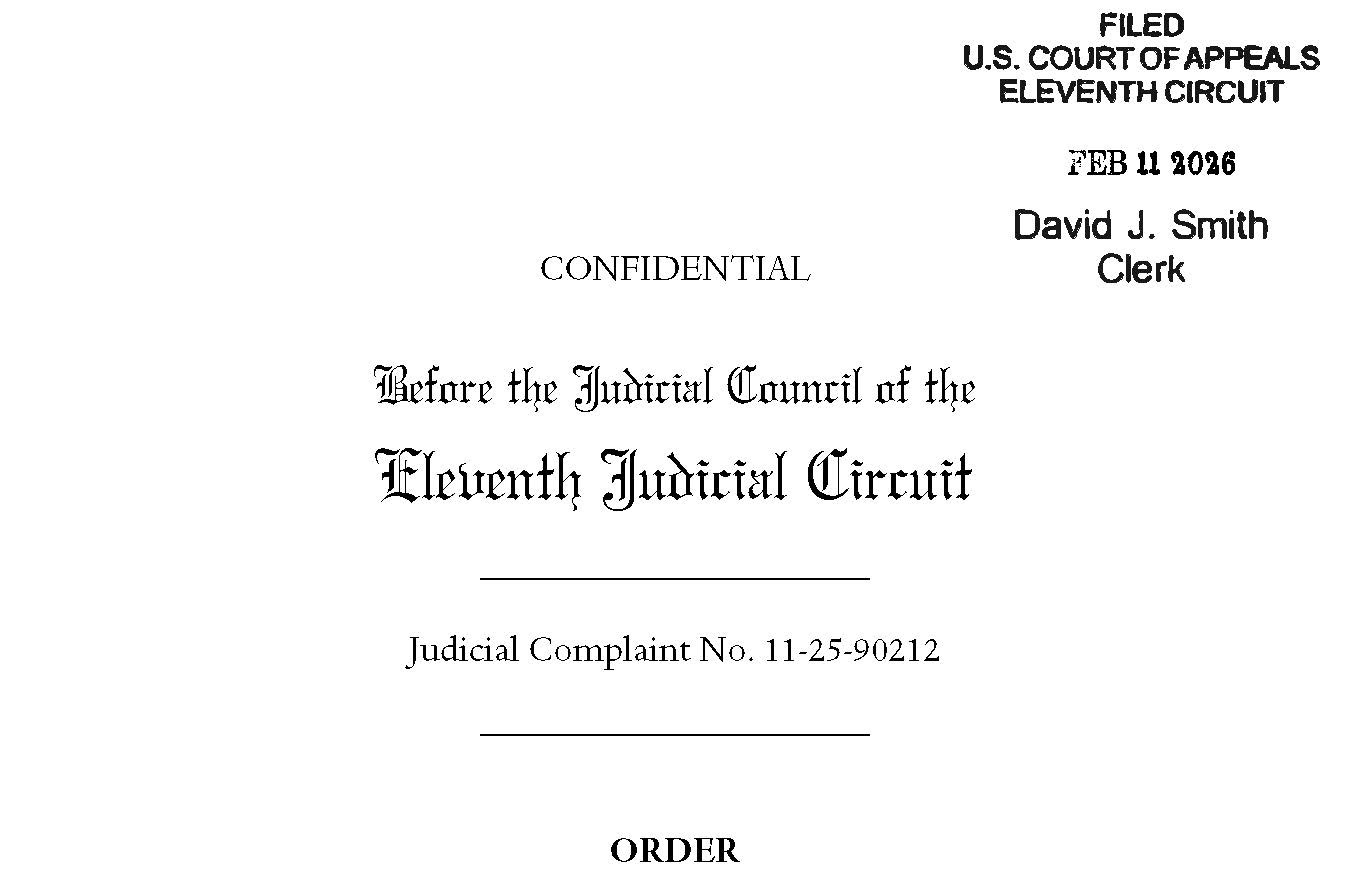
That is exactly why a story like the one that emerged on Tuesday—about a February 11 Eleventh Circuit Judicial Council ruling regarding a judicial misconduct case—is worth dwelling on, even as it makes a defender of the district courts wince. In a nutshell, the case arises from a multi-year affair a district judge carried out with a senior officer in a local police department, including in chambers during business hours (and within earshot of law clerks). When one of the judge’s clerks complained to the district court’s Chief Judge, the “subject judge” not only aggressively denied the charge, but attempted to blame the clerk for trying to retaliate against the judge. The subject judge only came clean once a special committee appointed to investigate the matter discovered incontrovertible evidence of the affair—and even then, still tried to put some of the blame on their clerk. (The subject judge also attended a partisan political event and was … less than fully candid about it.) Despite all of that, the Eleventh Circuit Judicial Council recommended only a “private reprimand,” because of “(1) the Subject Judge’s correction of the judge’s false statements and subsequent candor with the special committee; (2) the unlikelihood that the Subject Judge will engage in similar misconduct in the future, evidenced by the judge discontinuing the relationship with the Officer and commitment to avoid future partisan political events; and (3) the Subject Judge’s otherwise exemplary service to the court.”
As I explain below the fold, my own view is that a “private reprimand” was not a remotely sufficient punishment for the subject judge’s misconduct—not because of the affair, but because of the subject judge’s dishonesty and their transparent attempt to throw one of their own law clerks under the bus. Especially today, the federal judiciary needs to look not merely competent but conspicuously above reproach. A “private reprimand” of an unnamed district judge who carried on an extramarital affair in their chambers, lied about it to two chief judges, and tried to shift the focus to alleged retaliation by a law clerk does not look that way. It looks like the institution flipping over the (not-so-proverbial) cushion.
For those who aren’t paid subscribers, we’ll be back (no later than) Monday with our continuing coverage of the Supreme Court. For those who are, please read on.
