

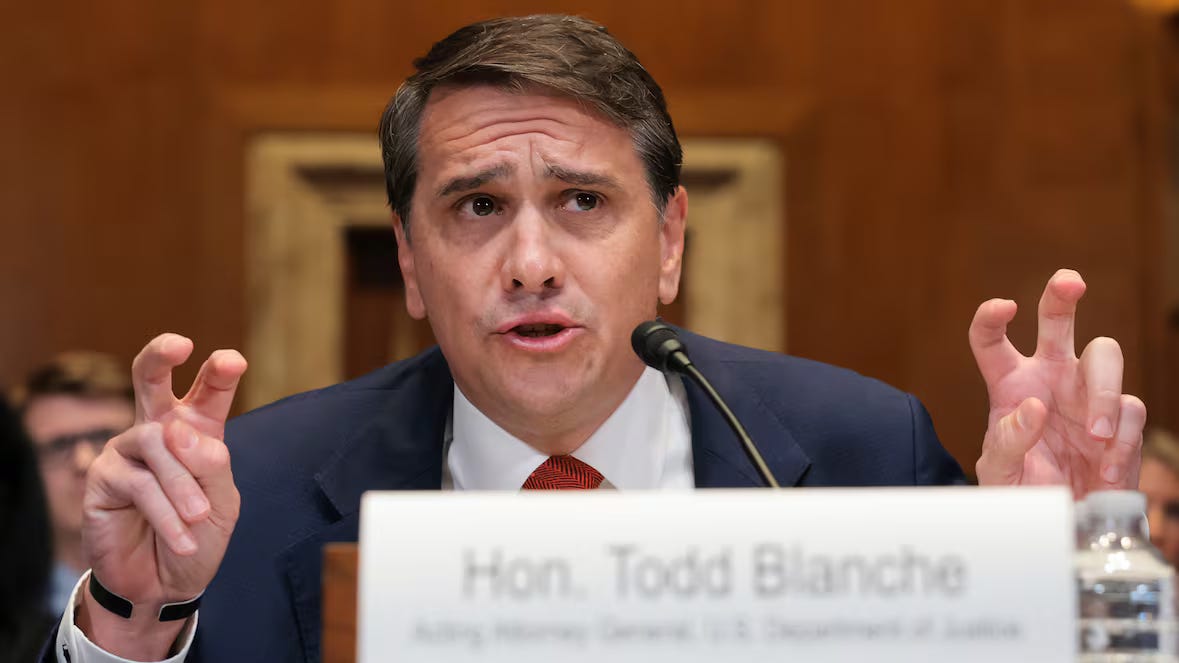
Every so often a story comes along that is so brazen, so cleanly emblematic of the moment we are living through, that staying quiet about it feels like a kind of complicity unto itself. Monday’s announcement by the Department of Justice that the Acting Attorney General has unilaterally created a $1.776 billion “Anti-Weaponization Fund” to compensate so-called “victims of lawfare” is one of those stories. And the reason I want to write about it here, in a newsletter ostensibly devoted to the Supreme Court and the law and politics surrounding it, is that I’m increasingly worried that we’re asking the wrong institution to save us from one of the most offensive, alarming, and anti-constitutional things we’ve seen from any president in American history.
As I explain below the fold, the Anti-Weaponization Fund is not principally a legal problem awaiting a judicial fix. It is a shockingly egregious political abuse—the President suing his own government, purporting to settle with himself, and routing nearly $2 billion from the Treasury to his own supporters as a not-so-subtle (and not-so-formal) reward, if not an incentive, for political violence. And the Constitution’s answer to political abuses of this kind and magnitude is a political remedy, not a legal one. In his majority opinion in NFIB v. Sebelius (the Affordable Care Act case from 2012), Chief Justice Roberts defended the Court’s endorsement of Congress’s power to adopt the individual mandate by noting that it is “not our job to protect the people from the consequences of their political choices.” As much of a judicial supremacist as I am, that sentiment is, for better or worse, an entirely correct (and, in the long term, normatively desirable) institutional assessment. One can believe in substantial judicial power without believing that literally every political dispute in our country can and should be resolved by unelected judges.
The real upshot of this latest headline (among so, so many other similar headlines) is that it is past time to reinvigorate impeachment—not because conviction is realistic in this Senate, or even because impeachment itself is feasible in this House, but because forcing every member of Congress to vote on the record whether this brazen, corrosive, and affirmatively dangerous corruption is impeachable is itself a point worth fighting for (and fighting with our friends over). Assuming the courts will save us absolves our political leaders of both responsibility and accountability for allowing this kind of mischief to continue, and it absolves all of us of our responsibility to refuse to tolerate those who would just as quickly shrug their shoulders and move on.
For those who aren’t paid subscribers, we’ll be back (no later than) Monday with our continuing coverage of the Supreme Court. For those who are, please read on.
