

Welcome back to the weekly bonus content for “One First.” Although Monday’s regular newsletter and other unscheduled issues will remain free for as long as I’m able to do this, I put much of the weekly bonus issue behind a paywall as an added extra for those who are willing and able to support the work that goes into putting this newsletter together every week. I’m grateful to those of you who are already paid subscribers, and I hope that those of you who aren’t will consider a paid subscription if and when your circumstances permit:
Obviously, the biggest (and most angering) headline yesterday was the (to my view, completely unjustified) fatal shooting of a Minneapolis woman by an as-yet-unidentified ICE officer. In the hours after the shooting, numerous government officials—from President Trump himself to DHS Secretary Kristi Noem to DHS’s spokesperson—made public statements about the episode that are utterly belied by the multiple different videos, captured from different angles, of the shooting, apparently assuming that some number of folks will just take their word for it, or that the media will just report it.
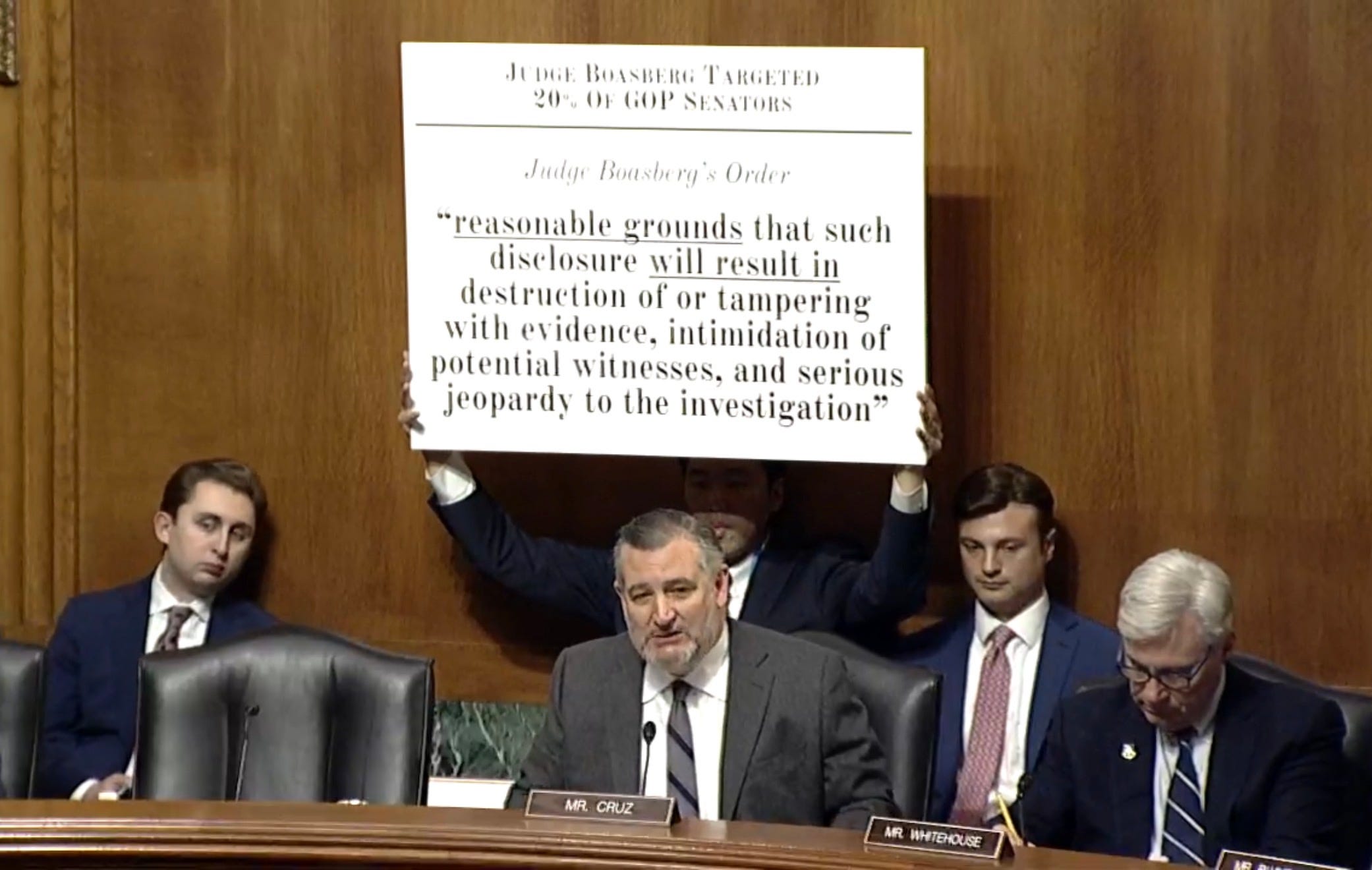
The effort to create a false narrative about the Minneapolis shooting dovetailed a little too perfectly with how I spent my Wednesday afternoon—testifying at a Senate Judiciary subcommittee hearing convened by Texas Senator Ted Cruz on whether the House of Representatives should pursue articles of impeachment against two federal district judges—Chief Judge James E. Boasberg (D.D.C.) and Judge Deborah Boardman (D. Md.). (My written testimony is here.)
Putting the Boardman case to the side (where the only complaint relates to the length of the 97-month sentence she imposed on Sophie Roske for the attempted assassination of Justice Kavanaugh, which the Trump administration is currently appealing to the Fourth Circuit), the putative case against Boasberg is based on two sets of claims—one relating to his alleged misconduct in the J.G.G. Alien Enemies Act litigation; and one relating to his approval of non-disclosure orders (NDOs) for call records as part of the Arctic Frost investigation, some of which covered the records of some (Republican) senators. What’s striking about both sets of claims (which are memorialized in a letter Senator Cruz sent to the House yesterday) is that they’re based on factual assertions that have been specifically rejected in separate letters to Congress from the Administrative Office of the U.S. Courts (the “AO”)—one about case assignment procedures and one about how district courts process NDO requests.
Below the fold, I’ll walk through the multiple respects in which these two letters directly undermine the claims of misconduct against Chief Judge Boasberg. But before I get there, it seems worth stressing two different points: First, it is striking, and deeply commendable, that the AO saw fit to file these letters in the first place. By name, by design, and by tradition, the AO is a wholly administrative entity that does not take positions on anything, but that merely provides resources and assistance to the federal judiciary. Its letters are thus a modest but meaningful effort to build an independent record against which the performance of these judges can objectively be assessed—and I hope my sharing them publicly only furthers that goal. Second, to whatever extent Senator Cruz (and, heaven forbid, the House) may have been entitled to pursue these claims against Chief Judge Boasberg before receiving these letters (my testimony focused on why impeachment is never appropriate solely because of disagreements with particular rulings), to continue to pursue them in the face of these correctives is far more than merely negligent. In that respect, it is telling that neither Senator Cruz nor anyone else at yesterday’s hearing made even a passing attempt to explain why the statements and/or conclusions in the AO letters were wrong.
For various reasons, I spent a lot of time in college reading Hannah Arendt. And although she’s best known for her work on the Eichmann trial and her book The Origins of Totalitarianism, one of my favorite pieces of hers is a less-known 1967 New Yorker essay titled “Truth and Politics.” Expanding on some of the themes of the Totalitarianism book, she concluded that “The result of a consistent and total substitution of lies for factual truth is not that the lie will now be accepted as truth and truth be defamed as a lie, but that the sense by which we take our bearings in the real world—and the category of truth versus falsehood is among the mental means to this end—is being destroyed.”
Part of why I write this newsletter is in the hope that, armed with receipts, readers will be better situated to preserve the critical distinction between truth and falsehood. Unfortunately, the critical need to carefully police that line was on sustained display yesterday afternoon.
For those who are not paid subscribers, we’ll be back (no later than) next Monday with more regular coverage of the Supreme Court. For those who are, please read on.

