

Welcome back to “One First,” a newsletter that aims to make the U.S. Supreme Court more accessible to lawyers and non-lawyers alike. I’m grateful to all of you for your continued support, and I hope that you’ll consider sharing some of what we’re doing with your networks.
Every Monday morning, I’ll be offering an update on goings-on at the Court (“On the Docket”); a longer introduction to some feature of the Court’s history, current issues, or key players (“The One First ‘Long Read’”); and some Court-related trivia. If you’re not already a subscriber, I hope you’ll consider becoming one—and upgrading to a paid subscription if your circumstances permit:
When University of Chicago law professor Will Baude coined the term “shadow docket” in 2015, he was writing principally in response to an uptick in a particular type of ruling off of the merits docket—a “summary reversal,” which is the (somewhat misleading) term often used to describe cases in which the justices dispose of an appeal through an unsigned opinion at the certiorari stage, rather than after granting certiorari, receiving plenary briefing, and holding oral argument. (Yes, Baude’s use of the term “shadow docket,” like mine, encompasses quite a bit more than just emergency applications.1)
Summary reversals aren’t conventional “merits” rulings; they’re decided based only upon the cert.-stage briefs (which, as we’ll see below, can rather skew the presentation), and without oral argument. Indeed, the idea is supposed to be that the lower court’s error is so obvious and apparent that there’s no need to conduct plenary review. But they still produce an “opinion of the Court,” one that the current Court treats as having comparable precedential effects to rulings it hands down after plenary review.
In 2015, Baude was reacting to a dramatic mid-decade uptick in the number of such summary rulings. But as Kalvis Golde documented in a fantastic student note in the Columbia Law Review, summary reversals had petered out shortly thereafter and into the early 2020s; indeed, during the entire October 2023 Term, there were none. (Adam Liptak wrote a piece in the New York Times in February 2025 citing Golde’s note and noting that “the justices have all but stopped issuing summary reversals.”) But less than halfway through the October 2025 Term, we’re already up to five summary reversals—the latest of which came last Monday in Zorn v. Linton, in which the Second Circuit had denied qualified immunity to a Vermont police officer on the ground that using a “rear wristlock” on a protester passively resisting arrest constitutes excessive force. Over public dissents from the three Democratic appointees, the Supreme Court reversed—“[b]ecause the Second Circuit failed to identify a case where an officer taking similar actions in similar circumstances ‘was held to have violated’ the Constitution.”
As I explain below, the ruling in Zorn is a useful illustration of two distinct sets of problems: the problems with the Supreme Court deciding these cases at the cert. stage at all; and the problems with its qualified immunity jurisprudence more generally. Zorn is likely to be cited going forward for only further limiting the circumstances in which a plaintiff can recover damages for a constitutional violation by government officers—in a context in which the Court’s consideration (and its analysis) was both cursory and skewed. If the justices want to make material expansions to their qualified immunity jurisprudence (which is problematic enough already), they ought to do so, at the very least, on the merits docket.
More on that below. But first, the other news.
On the Docket
The Merits Docket
After the summary reversal in Zorn, the Court also handed down two rulings in argued cases last Wednesday:
In Rico v. United States, Justice Gorsuch wrote for an 8-1 majority in rejecting the Ninth Circuit’s rule that, for purposes of federal criminal sentences, an absconding defendant’s term of supervised release does not expire when a court has directed—but continues to run so long as the defendant remains out of contact with his probation officer.2 As Gorsuch explained, although the Ninth Circuit described this rule as a “tolling” rule, it’s really an extension of supervised release—something the Sentencing Reform Act does not authorize without far more case-specific facts and findings. Only Justice Alito dissented.
In Cox Communications, Inc. v. Sony Music Entertainment, Justice Thomas held for seven justices that an internet service provider can be contributorily liable for a user’s copyright infringement only if it intended that its provided service be used for infringement—which can be shown only if the provider induced the infringement or the provided service is tailored to that infringement. Justice Sotomayor (joined by Justice Jackson) concurred in the judgment—agreeing with the result in this case, but disagreeing with how much the majority opinion narrows secondary liability for copyright infringement in other cases.
Monday’s Order List also brought with it two different opinions by Justice Sotomayor dissenting from denials of certiorari:
Reed v. Goertz is a case the Court has heard before, in which a Texas state prisoner is seeking access to the murder weapon in the case in which he was convicted of capital charges, so he can conduct a DNA test that (he claims) will exonerate him. Texas has refused, and the Fifth Circuit rejected two of Reed’s three constitutional objections to Texas’s refusal to conduct such a test (and apparently skipped right over the third). As Sotomayor argued in a dissent joined by Justices Kagan and Jackson, the Court should at least require the Fifth Circuit to actually resolve Reed’s third argument—and then grant cert. if it rejects it. Instead, by denying certiorari, “the State will likely execute Reed without the world ever knowing whether Reed’s or Fennell’s DNA is on the murder weapon, even though a simple DNA test could reveal that information.” Sigh.
Villareal v. Alaniz also comes from the Fifth Circuit, where a deeply divided en banc court had held that a police department and district attorney’s office were entitled to qualified immunity in a civil suit by a citizen journalist who alleged that they had retaliated against her because they disliked much of her reporting on their activities—holding that, because Villarreal alleged that the officials violated her First Amendment rights by arresting her, she had to prove a Fourth Amendment violation too (i.e., that the arrest was itself unconstitutional, and not just retaliatory). Justice Sotomayor’s dissent outlined the three different problems with that analysis; I won’t rehash them here. And although denials of certiorari aren’t precedential, it’s more than a little alarming that the Court would leave intact a Fifth Circuit ruling that makes it so much harder for journalists to seek remedies when they are retaliated against for constitutionally protected newsgathering—especially for those journalists working in the Fifth Circuit’s three states, i.e., Louisiana, Mississippi, and Texas.
The Emergency Docket
It was an unusally quiet week on the emergency docket—without a single full Court ruling on an application. Nor is that likely to change this week; I’m not aware of any pending applications that are likely to produce a full Court ruling (let alone a ruling this week).
The Week Ahead
Instead, the real focus of this week is going to be the merits docket. We expect a regular Order List at 9:30 this morning, followed by the second week of the “March” argument session starting at 10:00 (the highlight of which is unquestionably the birthright citizenship case, which is set for oral argument on Wednesday).
The Court has also announced that it will hand down one or more rulings in argued cases on Tuesday at 10:00 ET. I know everyone is focused on the “big” cases, and maybe some of those are coming soon. But there are still plenty of cases of more modest political or legal importance that were argued in November or December and decisions in which remain outstanding. It wouldn’t surprise me if those were the focus of Tuesday’s hand-downs.
Miscellaneous
Finally, the Court has tweaked the oral argument calender for the “April” session (which begins on April 20) to account for the late-added argument in the Haiti and Syria TPS cases. Those cases will now be the first argument on the last scheduled day of arguments for the October 2025 Term, i.e., Wednesday, April 29.
The One First “Long Read”:
Qualifying Official Immunity
As I teach my Federal Courts students, the idea that government officers should be entitled to at least some immunity from having to pay damages when they commit constitutional violations isn’t a new one. Indeed, the Supreme Court’s modern articulation of the standard for what’s now known as “qualified immunity” dates to its 1982 ruling in Harlow v. Fitzgerald, which held that “government officials performing discretionary functions, generally are shielded from liability for civil damages insofar as their conduct does not violate clearly established statutory or constitutional rights of which a reasonable person would have known.”
Although the Court still follows this test, it has done two things in the ensuing 44 years, in particular, that have helped to make qualified immunity (“QI”) such a font of controversy—and to make it far harder for victims of constitutional violations to recover not just today, but tomorrow.
First, the Court has clarified that the “clearly established” question is not whether the plaintiffs’ rights were clearly established, but whether it was clearly established that the defendant’s conduct was unconstitutional. This line of cases, which dates to Anderson v. Creighton, has thus shifted the focus away from the injuries the plaintiff has suffered and toward the specific means by which they were inflicted. Excessive force claims for QI purposes thus aren’t all similar; the question becomes not only exactly how the officer’s force was excessive, but the broader particulars of the context in which the (allegedly) excessive force was used. Thus, many qualified immunity cases have turned into a hunt for precedent—and whether there are cases with sufficiently similar facts in which an officer was held to have violated the Constitution.
Second, and related, the Court has made it much harder for those precedents to be generated. A court in a qualified immunity case has (at least) two different questions before it—whether the officer’s conduct was actually unconstitutional (the “legality” question); and whether the unconstitutionality was clearly established (the “liability” question). For a time (from 2001-09), the justices required federal courts to answer both questions—even in cases in which the answer to the liability question was “no” (that is, where the officer was going to escape liability whether or not his conduct was actually unconstitutional). The point of having courts also answer the legality question in those cases (what became known as the “Saucier sequence”) was so that, even if the officer in Case 1 prevailed, the law would be “clearly established” going forward. Future officers who committed similarly unconstitutional conduct from that point onwards would necessarily lose (and would also be deterred from committing that conduct).
But in 2009, the Court unanimously overruled Saucier in Pearson v. Callahan—holding that, in cases in which the law was not already “clearly established,” courts can, but don’t have to, answer the legality question. And in 2011, it went even further—with Justice Kagan’s majority opinion in Camreta v. Greene urging lower courts to “think hard, and then think hard again, before turning small cases into large ones” by doing so. As a result, the typical qualified immunity ruling today is one that holds that the law was not clearly established, and then . . . declines to establish it. Unless the law can be established in other contexts (e.g., through suits for injunctive relief or as defenses in criminal prosecutions), the result is that the law remains quite frozen—and government officers can commit the same constitutional violations over and over again without fear of liability until some case actually holds that their conduct was unconstitutional.3
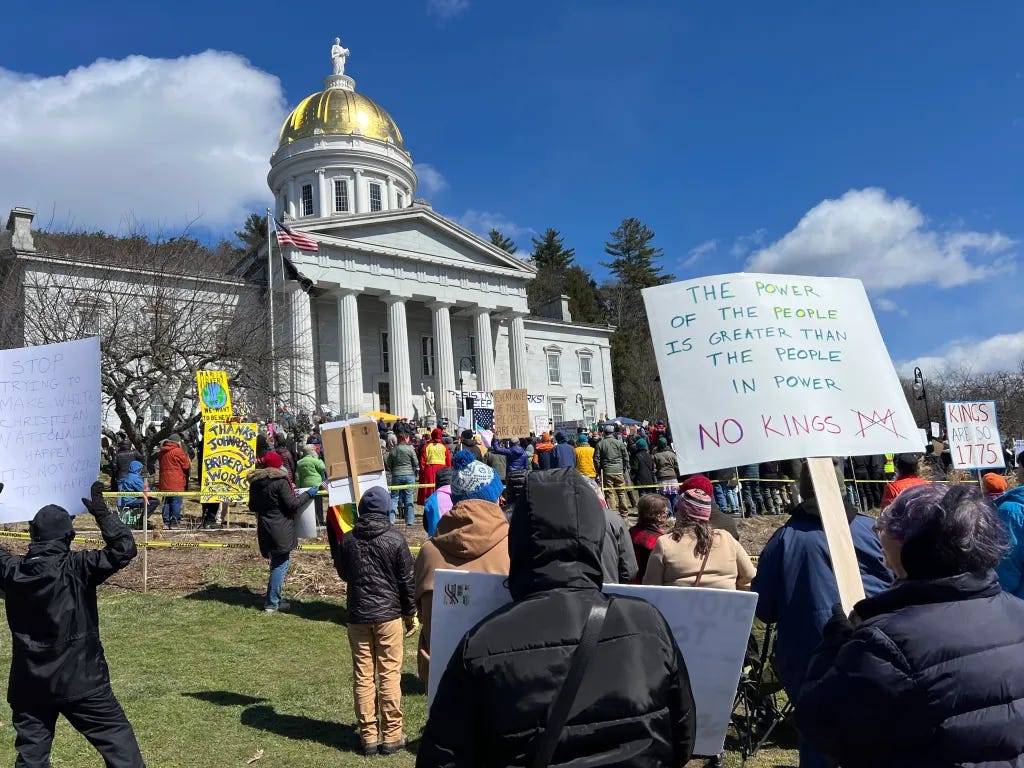
Zorn v. Linton reached the Court against that backdrop. The case arose out of the arrest of a protestor who was part of a sit-in at the Vermont State Capitol in 2015. Although Shela Linton refused to cooperate with law enforcement officers who asked her to leave, she was only passively resisting when Sergeant Jacob Zorn used a “rear wristlock” to subdue her and remove her from the grounds, in a context in which there was no broader threat to the officer’s or the public’s safety that might have justified such force. Linton brought suit, claiming that Zorn had used excessive force in violation of the Fourth Amendment, and that the constitutional violation had causes both physical and psychological injuries.
The Second Circuit agreed, at least at the summary judgment stage. It held that one of its earlier rulings clearly established that the “gratuitous” use of a rear wristlock on a protester passively resisting arrest constitutes excessive force under the circumstances.
The Supreme Court summarily reversed. The heart of the unsigned majority opinion was its explanation for why that one earlier Second Circuit case did not actually clearly establish the relevant principle. Even assuming circuit precedent (versus Supreme Court precedent) can clearly establish the law,4 as the Court explained, “[r]easonable officials would not ‘interpret [that prior case] to establish’ that using a routine wristlock to move a resistant protester after warning her, without more, violates the Constitution.” In other words, because six (or five)5 justices disagreed with the Second Circuit’s interpretation of its own precedent, the law was not “clearly established.”
Justice Sotomayor, joined by Justices Kagan and Jackson, dissented. As she wrote,
At bottom, the majority’s analysis rests on the assumption that the law can be clearly established only by factually identical case[s] directly on point, despite the Court’s rejection of such a standard. Instead, it is “enough that governing law places ‘the constitutionality of the officer’s conduct beyond debate.’” Here, taking the facts in the light most favorable to Linton, it is “beyond debate” that Zorn’s use of pain compliance against the passively resisting Linton was excessive.
But Sotomayor also objected to the Court reaching that holding in the context of summary adjudication: “Relying on disputed facts, the Court today simply disagrees with how the Second Circuit applied a correctly stated legal standard (the requirement that law be established to ‘a high degree of specificity’ in the qualified immunity analysis) to this particular set of facts. That is a routine, and nowhere near extraordinary, dispute that did not require the Court’s intervention.”
Needless to say, I find it difficult to disagree with Sotomayor on either the substantive point or the procedural one. Indeed, it seems like the only way to truly defend the majority’s analysis is as demanding a factually identical case to establish that the unconstitutionality of the officer’s conduct is “clearly established.” Sotomayor is not only right that the Court has never held that (and has regularly insisted to the contrary), but that would be a pretty striking thing for the Court to hold in a case in which it did not receive full briefing or have oral argument.
As Justice Sotomayor has pointed out before, summary adjudication is a distorted lens through which to conduct any of this kind of analysis, because the briefing before the Court tends to be both skewed and one-sided. It’s skewed because cert. stage briefing is about why the Supreme Court should take up a case—not why the lower court was right or wrong. And it’s one-sided because, at the cert. stage, the Court tends not to hear from interested parties in support of the decision below; bottom-side cert.-stage amicus briefs are exceedingly rare, since the whole point of opposing certiorari is to make the case seem unworthy of the Court’s attention. A bunch of flashy friend-of-the-Court briefs would necessarily send the opposite message.
In a 2013 student piece in the Yale Law Journal Online, Alex Hemmer criticized the Supreme Court’s approach to summary adjudication in the early years of the Roberts Court as “distorting both its error-correcting and law-declaring functions.” To the former, Hemmer found reason to be concerned that the uptick in summary adjudication was encouraging the justices to “wade into fact-bound disagreements” in contexts in which the Court would historically have given lower courts the last word, and, per Sotomayor, doing so asymmetrically (one does not see, for example, summary reversals of circuit-level rulings granting qualified immunity to officers). To the latter, Hemmer argued that the Court’s summary rulings were “claiming to apply settled questions of law while in fact answering those questions anew without the benefit of slow, considered judgment.”
Zorn v. Linton suffers from both of those defects in spades. The justices spent their finite capital to resolve a fact-bound case at the summary judgment stage (in which the officer might very well have prevailed at trial); and they did so in a ruling that makes sense only if it stands for a significant narrowing of the circumstances in which circuit precedent can clearly establish the unconstitutionality of an officer’s (mis)conduct. And for those who might respond that the Court won’t treat Zorn as quite the same degree of precedent as it would a merits docket ruling, well, the unsigned majority opinion in Zorn itself cites four of the Court’s prior summary reversals in qualified immunity cases as precedents. Lower courts unquestionably have done (and will do) the same thing.
Ultimately, for all of the oxygen that the emergency docket has consumed in public and academic discussions (and criticisms) of the shadow docket, Zorn is a good reminder that the Court gets up to plenty of mischief elsewhere away from its merits docket—and that the benefits of plenary review, oral argument, and full-throated opinions aren’t limited to emergency applications.
SCOTUS Trivia:
How Many Votes for Summary Reversals?
Just like last week’s trivia focused on the (unwritten) voting threshold for granting certiorari before judgment (five votes), I wanted to use this week’s trivia to focus on the even-more-obscure threshold for summary adjudication. For a very long time, the suspicion among Court watchers was that it takes six votes to agree to summary adjudication—for the entirely mechanical reason that any four justices can vote for plenary review by granting certiorari. Summary adjudication, then, presumably requires no more than three justices voting for plenary review (and, so, six voting against).
Justice Alito appeared to confirm this understanding in his “Emergency Docket” speech at Notre Dame Law School in September 2021, and then Justice Breyer likewise endorsed it in an October 2021 interview with (my CNN colleague) Joan Biskupic—referring to it as “a custom.”
That said, there are still a handful of examples of summary adjudications in which there are four dissents. My best guess for how that’s happening is that there are two different questions—whether the case should be resolved summarily, and how it should be resolved. So it’s possible that fewer than four justices might want to grant plenary review, but that four justices disagree with the other five about what a summary adjudication looks like.
Of course, it’s impossible to say whether that’s true, or whether it’s just that sometimes the Court doesn’t follow the six-vote “custom”—because it isn’t written down anywhere. There’s a reason why, the best efforts of certain justices and the Court’s defenders to the contrary notwithstanding, calling it the shadow docket has stuck.
I hope that you’ve enjoyed this installment of “One First.” If you have feedback about today’s issue, or thoughts about future topics, please feel free to e-mail me. And if you liked it, please help spread the word!
If you’re not already a paid subscriber and are interested in receiving regular bonus content (or, at the very least, in supporting the work that goes into this newsletter), please consider becoming one:
This week’s bonus issue for paid subscribers will drop on Thursday. And we’ll be back with our regular content for everyone (no later than) next Monday. As ever, please stay safe out there—especially from rear wristlocks.
This is why I chafe a bit when folks treat the term “shadow docket” as being synonymous with “emergency docket.” At least the way Baude and I have always used the term, the emergency docket is a small (if especially significant) subset of what the Court does on the shadow docket, but there are plenty of important rulings that come through other non-merits adjudications—like the one on which today’s newsletter is focused. Indeed, the first two chapters of The Shadow Docket are about certiorari and cert.-stage rulings—not emergency relief.
Just dropping a note here to point out that the Court reversed the Ninth Circuit for being too strict against federal criminal defendants—yet another data point for the problems of making broad claims based upon superficial Supreme Court statistics like circuit reversal rates.
This reality also creates skew in how much law there is based upon the type of right at issue. There are far more suits for injunctive relief under the First Amendment, for example, than under the Fourth. Likewise, the government can avoid a Fourth Amendment defense in a criminal case by simply not seeking to introduce evidence obtained in violation of the Fourth Amendment.
One of the most frustrating features of the Supreme Court’s QI jurisprudence is this assumption, reflected in footnote 3. The Court only started raising the possiiblity that circuit precedent might not always suffice to clearly establish the law in 2009. But in recent cases, virtually all of which it has resolved through summary adjudication, it has flipped that into an “assumption” that circuit precedent even can clearly establish law—something it refuses to actually hold. Of course, if only the Supreme Court can clearly establish law for qualified immunity purposes (something that is already true for post-conviction habeas petitions by state prisoners), that would do even more to freeze the formation of forward-looking constitutional rights.
Yes—this is another context in which we can’t be sure of the vote count.
FWIW, the (entirely correct) point about the lack of bottom side amicus briefs in summarily reversed cases carries an implication that is probably uncomfortable to much of the SCOTUS bar. Which is, there are way too many amicus briefs and the role they play in the Court's decision-making is way too undefined.
For instance, this whole practice of not filing bottom side amicus briefs at the cert stage is obviously premised, as Prof. Vladeck says, on the idea that if a case gets a lot of amicus attention it will look "important". But if that is actually what is deciding cert petitions that is really bad! The cert standard shouldn't be (and officially isn't) "how many well funded interest groups and law professors care about the case?". If everyone just assumes the Court is violating that and counting up the amicus briefs, that's a bigger problem than the occasional summary reversal.
Indeed, one problem with the modern Court Prof. Vladeck doesn't focus on is that it simply loves culture war "salient" cases. It isn't merely that the Court is taking less cases (though it is)-- it's that the cases it is taken are dominated by the type of cases that generate online and media discussion and that law professors and groups endlessly want to talk about. If you have a boring business case with a circuit split, you are generally screwed. And amicus practice, if it affecting cert grants, makes this worse.
This is on top of the fact that a lot of amicus merits briefs are just utter crap. They mostly add nothing. For every Marty Lederman interpreting when the Guard may be deployed, there's at least 20 briefs filed soley to generate donations or make lawyers or law professors feel the ego gratification of having filed a brief in a big case.
Bottom line, amicus practice is probably making SCOTUS worse, not better, overall, and SCOTUS should probably make it very hard to file one unless there is something truly new to say (and they maybe should be banned entirely for either side at the cert stage).
Hmm, accountability avoidance seems to have become quite the rage in right wing America.